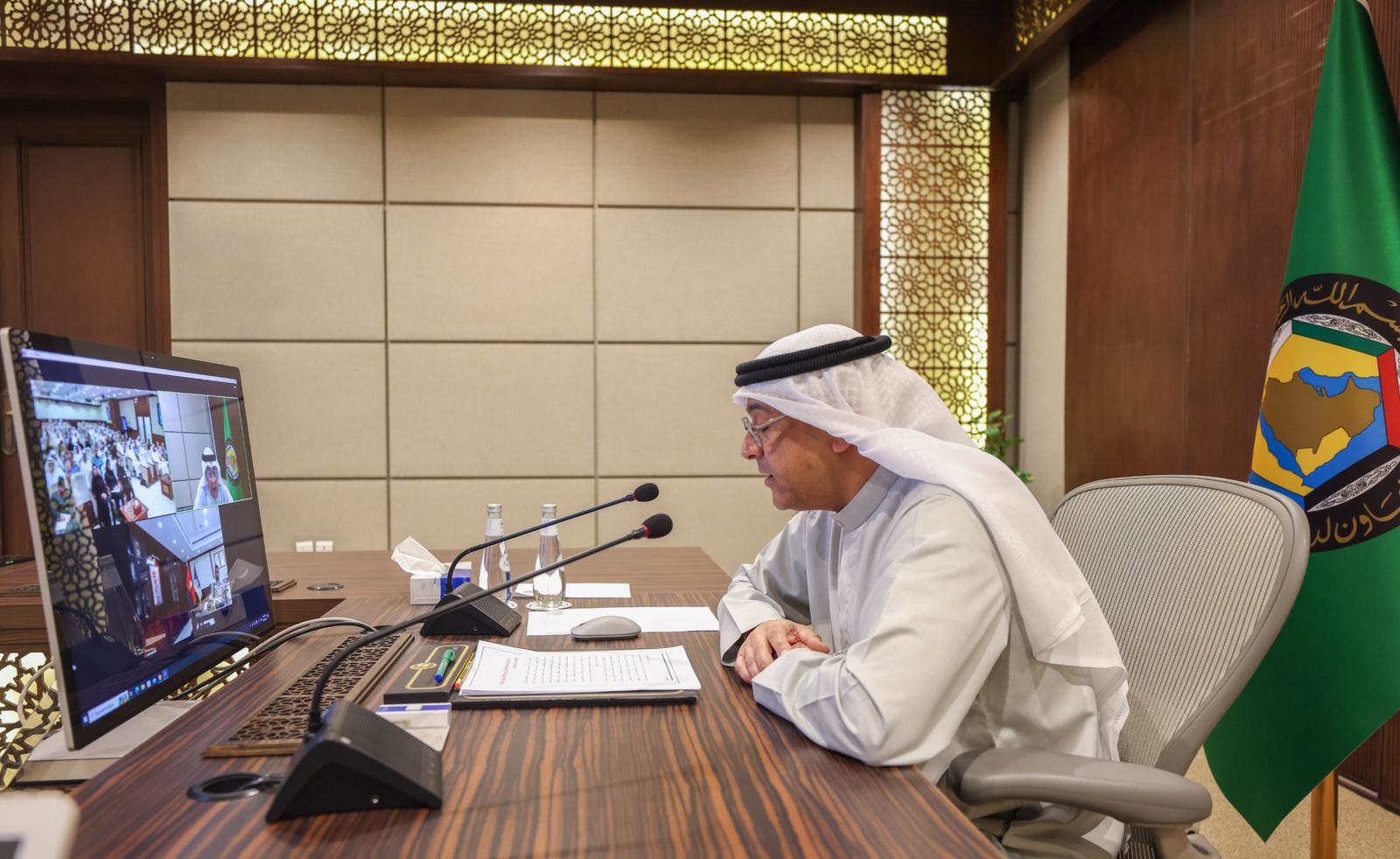
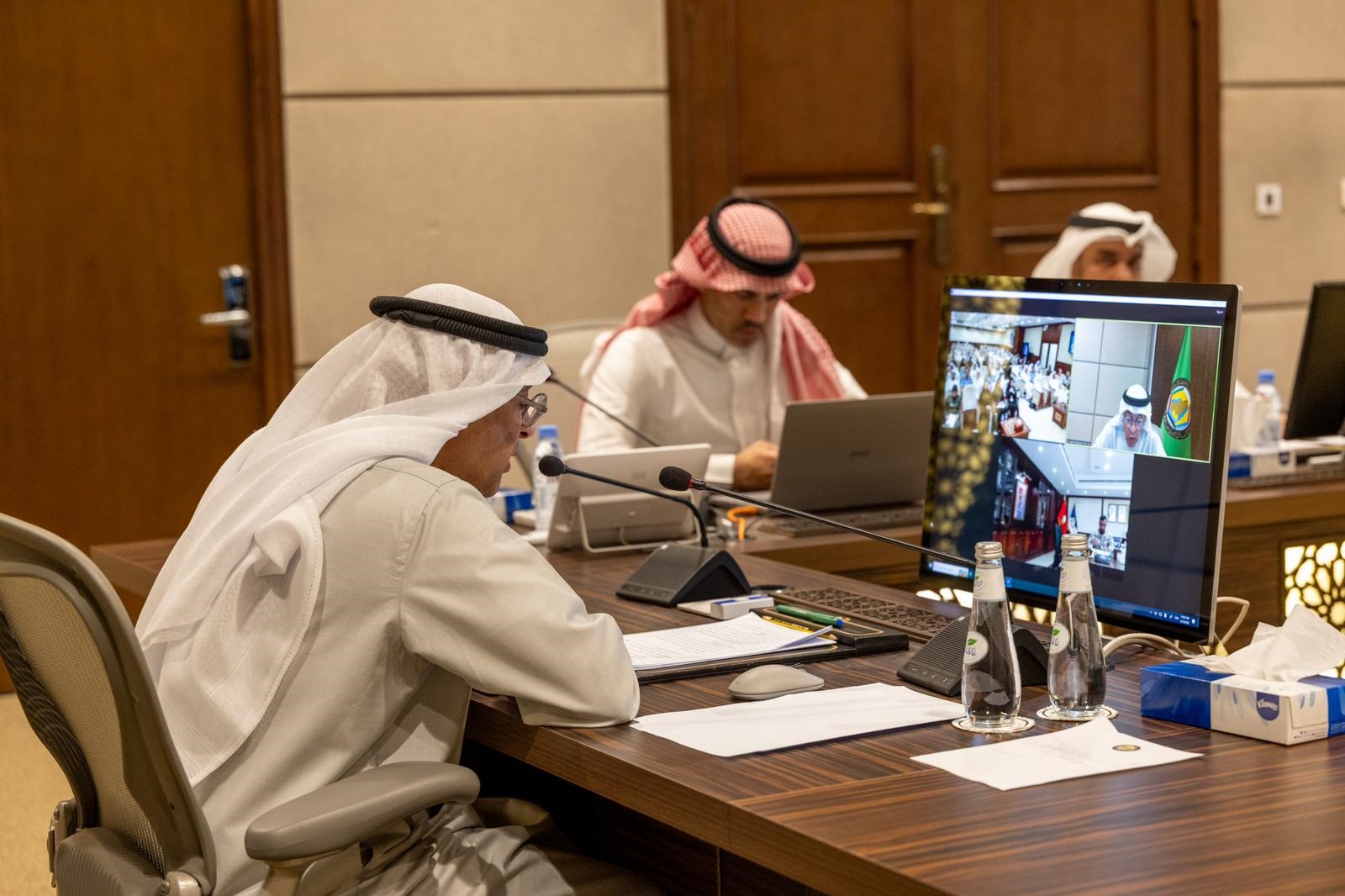
His Excellency Mr Jasem Mohamed Albudaiwi, Secretary General of the Gulf Cooperation Council (GCC), stated that the GCC represents a firm strategic pillar in facing rapid geopolitical shifts, exerting significant efforts to anticipate opportunities and address challenges.
This came during a lecture delivered by His Excellency the GCC Secretary General at the National Defense College (NDC) in the United Arab Emirates (UAE) today, Tuesday, May 12, 2026, via video conference. The session was attended by Major General Saeed Salmeen Al Alawi, Commandant of the College, along with faculty members and participants of the 13th National Defense Course.
At the outset of the lecture, His Excellency Mr Albudaiwi praised the heroic and professional role performed by the UAE Armed Forces in intercepting hundreds of missiles, thousands of drones, and dozens of treacherous Iranian cruise missiles.
"This success reflects a high level of efficiency, readiness, and vigilance, underscoring the advanced training and superior professional competence of the UAE Armed Forces in protecting the state’s security, safeguarding its resources, and ensuring the safety of its territories and citizens under the wise leadership of His Highness Shaikh Mohamed bin Zayed Al Nahyan, President of the UAE," His Excellency stated.
During the lecture, His Excellency outlined four main pillars. First, the strategic importance of the GCC amid current geopolitical shifts, which can be elucidated through several aspects vital to both the GCC and the world at large, and are closely linked to the stability of global economies. He summarised these as global energy security, a vital geographical location, combating terrorism and extremism, and economic markets and investments.
Second, Gulf foreign policy and the building of strategic partnerships. "The GCC states have achieved significant milestones through strategic partnerships and dialogues that have solidified the Council's presence on the international stage and enhanced its relations with other countries and blocs. This has been realised through convening summits with various nations and economic groups, such as the Central Asian states, the Association of Southeast Asian Nations (ASEAN), the European Union (EU), and the United Nations (UN). Additionally, significant dialogues and meetings at the foreign ministerial level have been held to deepen mutual understanding of international and regional issues, which are discussed annually on the sidelines of the UN General Assembly. These engagements support the policies of GCC states toward issues of common interest and open new horizons for expanding the Council's interests across all fields and continents. Furthermore, free trade negotiations with various countries and blocs have been instrumental in advancing relations, paving the way for strategic partnerships and dialogues to enhance economic and commercial ties. These negotiations aim to establish a collective negotiating power that bolsters the GCC’s position and secures economic gains through a unified Gulf stance," His Excellency explained.
Thirdly, His Excellency highlighted the role of the GCC General Secretariat and the Council’s achievements in several sectors, most notably the GCC Interconnection Grid and the GCC Railway project. Fourth and finally, the lecture addressed the Council’s future vision and the primary challenges within the regional and international strategic environments.
Moreover, His Excellency underscored that Iran must respond to international calls to maintain regional security and stability, which is essential for reducing tensions and destabilising conflicts that serve the interests of no party. His Excellency called upon the international community to take a firm stance toward Iran and to deal seriously with its violations related to its nuclear and missile programmes, as well as its support for terrorist groups.
He further stressed the necessity for Iran to implement all relevant Security Council resolutions and to cooperate fully with the International Atomic Energy Agency (IAEA), commending the Agency’s pivotal role in the verification and monitoring of Iran's nuclear programme. "The most prominent current challenges include the egregious Iranian attacks on GCC states, the Iranian file, the enhancement of self-defense military capabilities, regional issues, and the strategic goal of economic diversification," His Excellency highlighted.
Besides, His Excellency highlighted key foreign policy achievements during the lecture, most notably the unwavering support for the issue of the three occupied islands belonging to the UAE, the liberation of the State of Kuwait, and the continuous support provided to the Kingdom of Bahrain.
"The GCC represents a firm strategic pillar in facing rapid geopolitical shifts," His Excellency highlighted, emphasising that integration and cooperation among member states are not merely an option but an absolute necessity dictated by the nature of the current stage. He further said that building international partnerships and bolstering a unified Gulf foreign policy constitute the optimal approach for addressing both opportunities and challenges within a global environment undergoing a redrawing of the balance of power.
At the conclusion of the lecture, His Excellency engaged in a Q&A session with the college students, addressing their inquiries regarding the journey and achievements of the GCC across all fields.