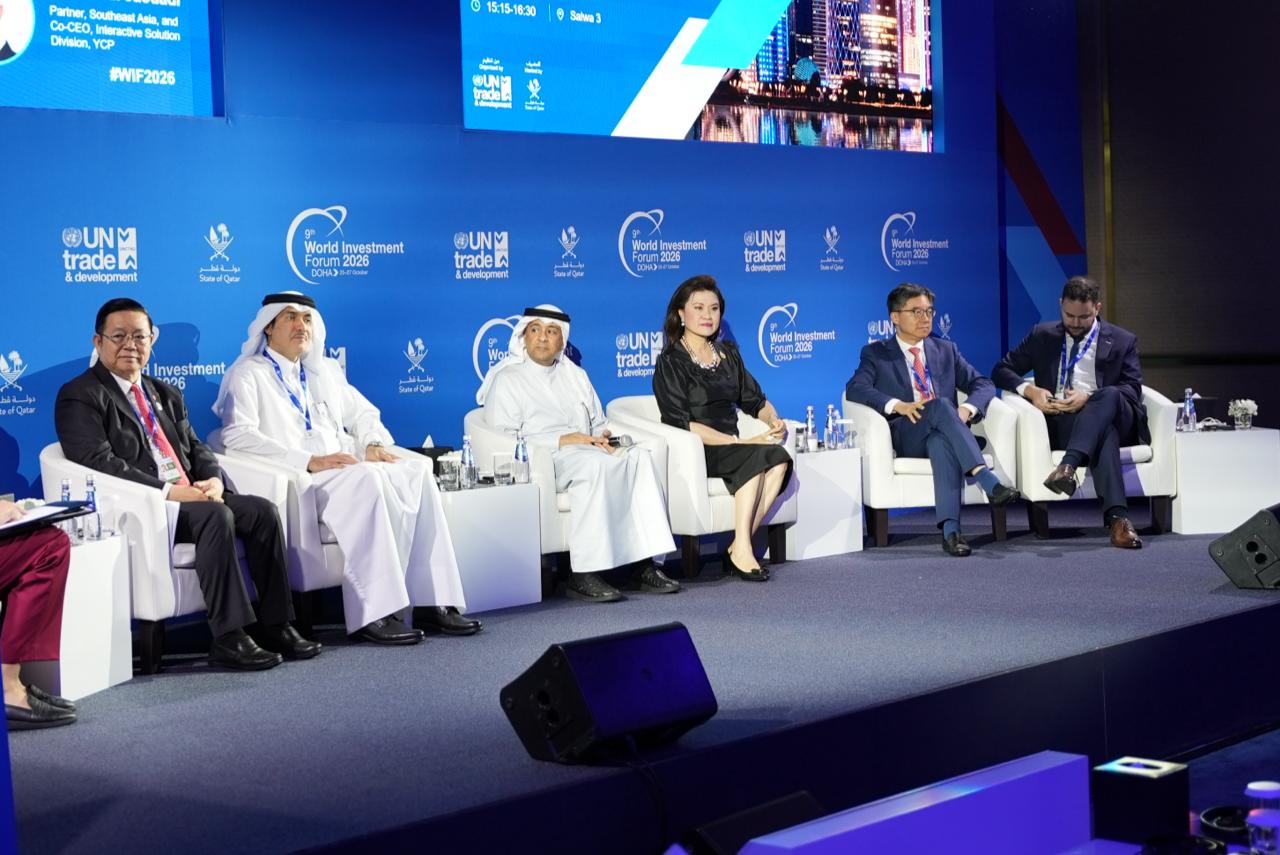
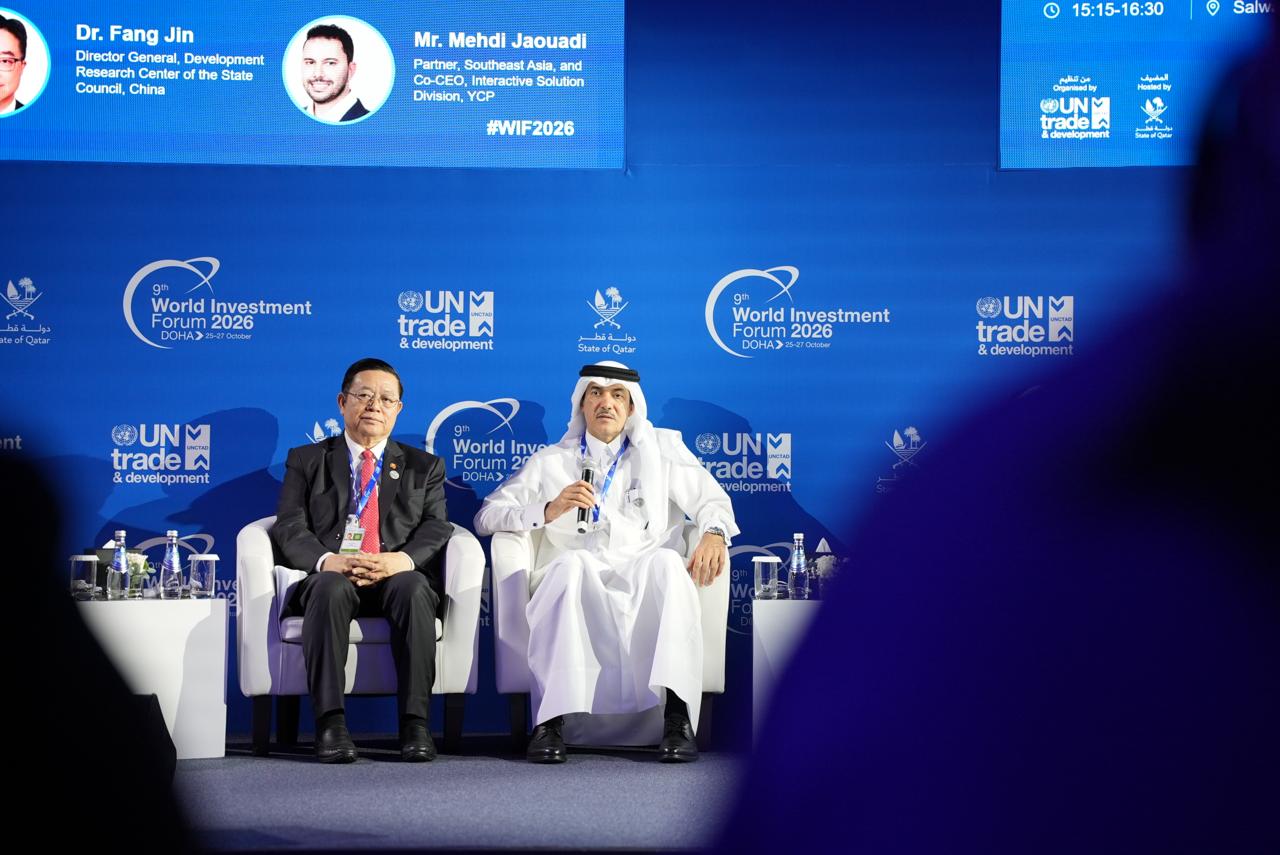
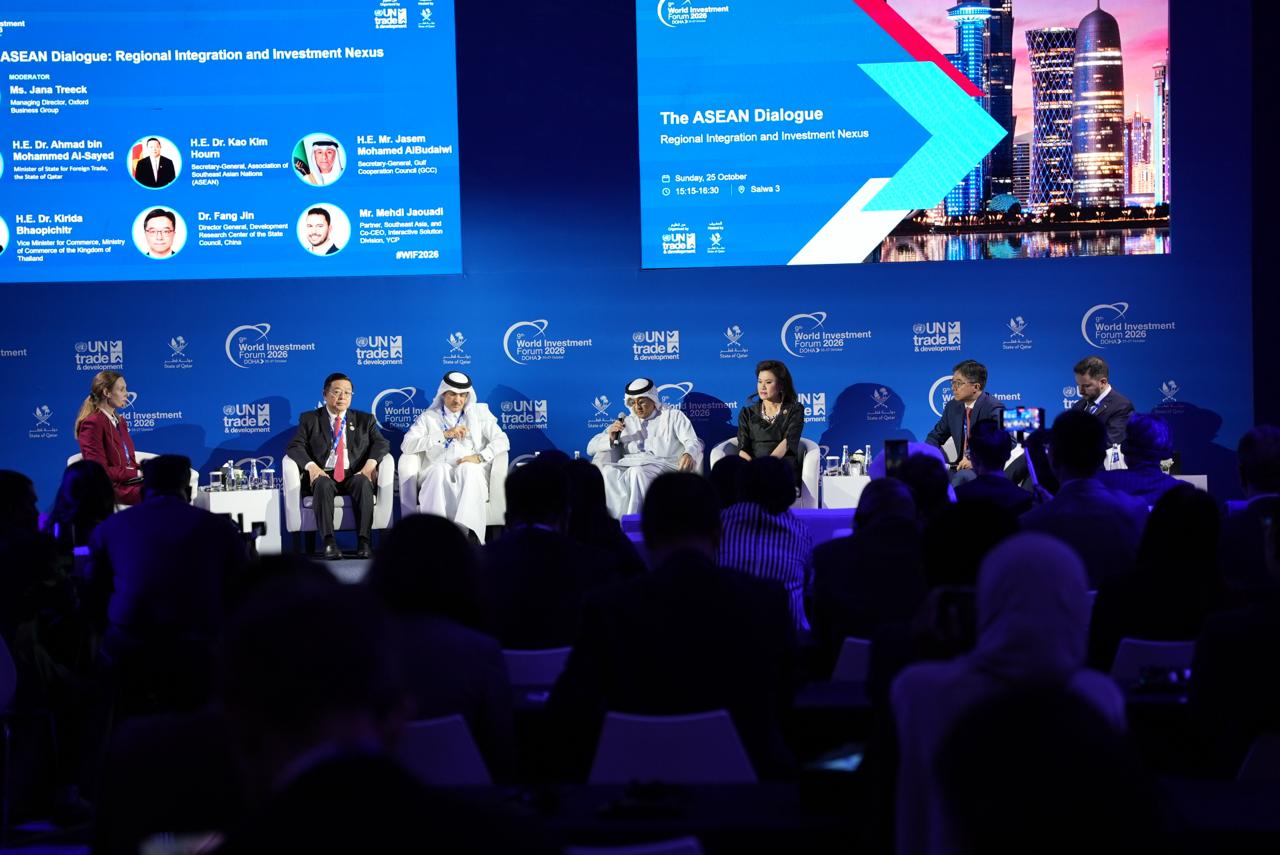
His Excellency Mr Jasem Mohamed Albudaiwi, Secretary General of the Gulf Cooperation Council (GCC), underscored that economic integration between the GCC and ASEAN represents a strategic pillar for bolstering investment flows and building partnerships that support mutual growth and prosperity between the two sides.
His Excellency's remarks came during his participation in the ASEAN Dialogue session on regional integration and its interconnectedness with investment, held in the Qatari capital, Doha, on Sunday, 25 October 2026, on the sidelines of the 9th World Investment Forum (WIF2026), in the presence of a number of Their Excellencies ministers and officials.
During his participation in the session, His Excellency the Secretary General stated that the global economy is witnessing profound and rapid transformations driven by geopolitical uncertainty, the reshaping of supply chains, and shifting international investment patterns. He noted that this cements the importance of regional integration as a strategic choice that is not limited to expanding markets, but extends to building economies that are more resilient, competitive, and capable of attracting investments and confronting global challenges.
"Economic integration has formed one of the fundamental pillars of the development journey in the GCC states. Thanks to the wise visions and sound directives of Their Majesties and Highnesses, the Leaders of the GCC states, the member countries of the GCC have been able to achieve advanced strides in the tracks of the Customs Union and the Gulf Common Market, and in bolstering economic interconnectedness, thereby solidifying the GCC's position as a global hub for trade, investment, energy, and logistics," His Excellency explained.
Moreover, he pointed out that the economies of the GCC states today represent an influential economic force on the international stage, with a total GDP of approximately USD 2.4 trillion and a volume of merchandise trade approaching USD 1.8 trillion. "These indicators reflect the robustness of the Gulf economic base and the promising capabilities and investment opportunities possessed by the GCC states," His Excellency highlighted.
His Excellency underscored that the experiences of both the GCC and the Association of Southeast Asian Nations (ASEAN) present an exemplary model of the capacity of regional cooperation to boost economic competitiveness and open new horizons for investment. He pointed out that integration between the two sides is based on mutual economic advantages, combining the investment capabilities of the GCC states, their energy sector resources, and advanced infrastructure, with the industrial networks, dynamic markets, and interconnected production chains enjoyed by the ASEAN countries.
Furthermore, His Excellency indicated that the two GCC-ASEAN summits, held in Riyadh in 2023 and Kuala Lumpur in 2025, established a solid foundation for elevating ties between the two sides. He affirmed that the upcoming phase requires transitioning from shared consensus and visions to expanding investment flows, enhancing the integration of supply chains, and building productive partnerships that achieve economic value-add for both sides.
His Excellency the Secretary General stressed the significance of advancing the tracks of practical cooperation between the GCC and ASEAN in the fields of advanced manufacturing, digital transformation, clean energy, logistics, and investment facilitation. This is in addition to continuing discussions regarding the possibility of concluding a Free Trade Agreement (FTA) between the two sides, which would contribute to removing barriers to trade and investment flows and open broader avenues for the private sector to capitalise on available economic opportunities.
His Excellency the Secretary General concluded his participation by underlining that the shared ambition of the GCC and ASEAN should transcend the boundaries of traditional cooperation towards building a more interconnected and integrated economic space. "In this space, the gains of regional integration would transform into cross-regional investments, mutual economic advantages into sustainable productive partnerships, and political commitments into tangible economic opportunities that reflect positively on the economic growth and prosperity of the peoples in both regions," His Excellency remarked.