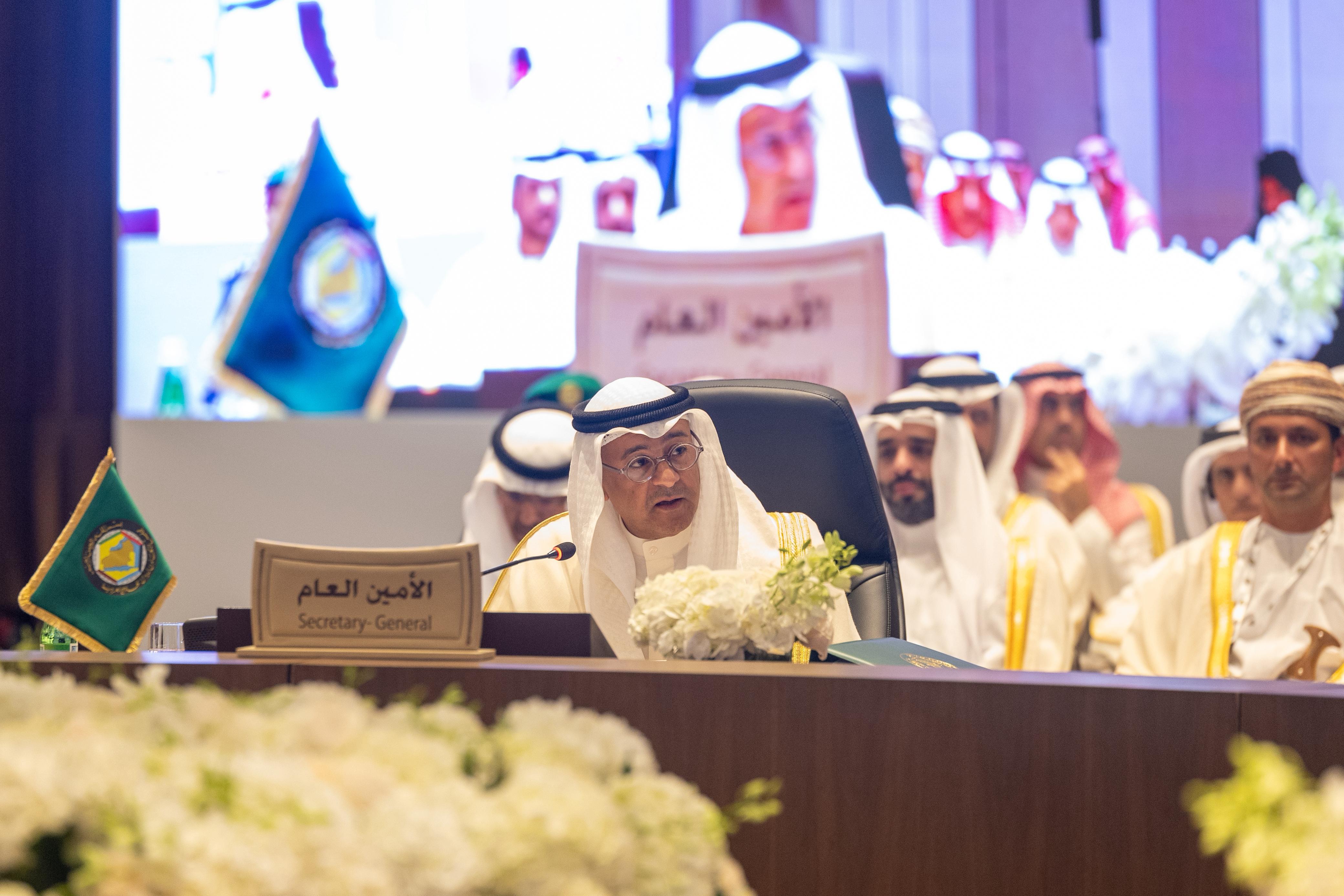
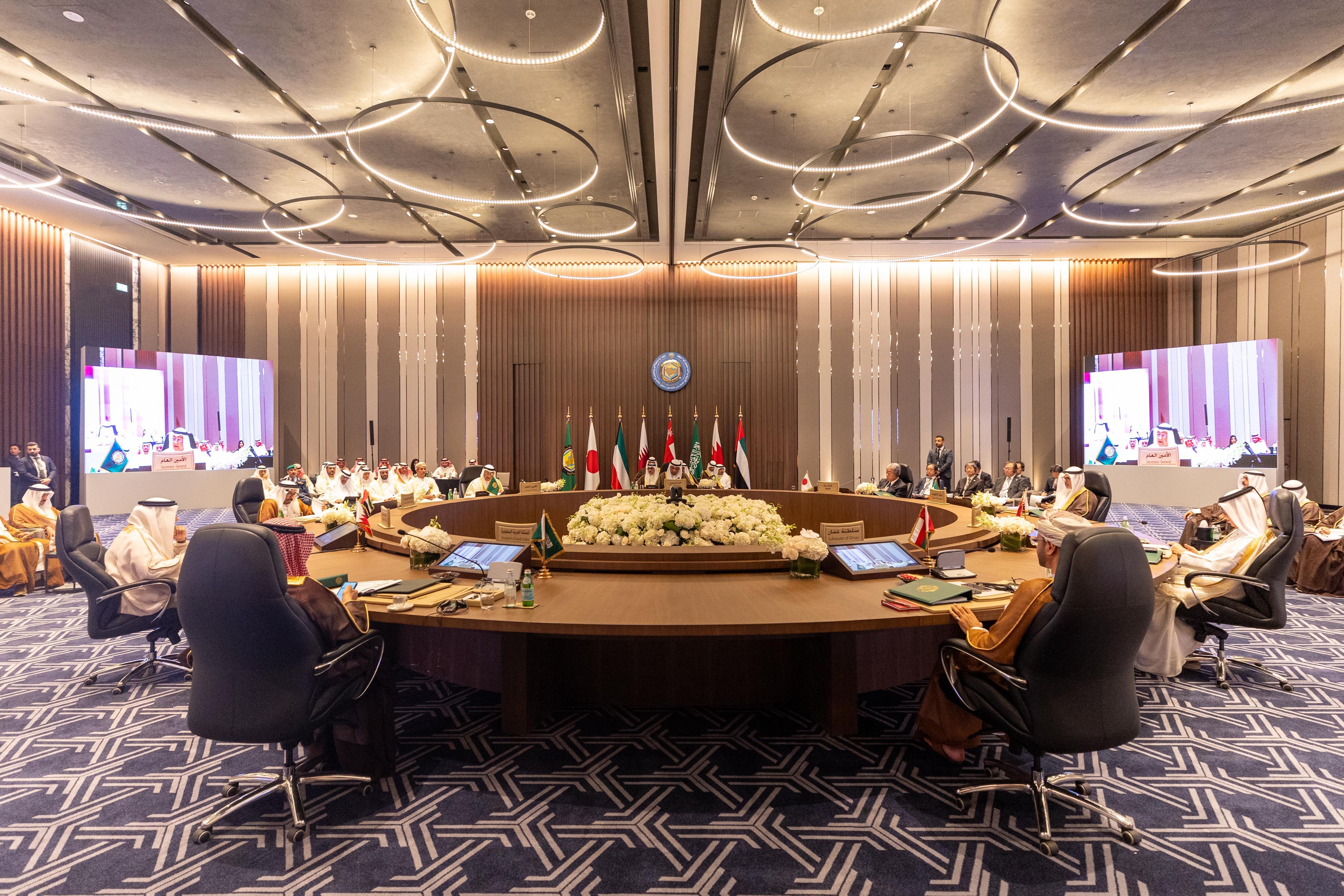
His Excellency Mr Jasem Mohamed Albudaiwi, Secretary General of the Gulf Cooperation Council (GCC), affirmed that the partnership between the GCC states and Japan is not only based on economic and political interests, but on a shared vision for a future of peace and sustainable development.
This came during his speech at the Second Joint Ministerial Meeting between the GCC and Japan, held on Monday (September 1, 2025) in Kuwait City, chaired by His Excellency Mr Abdullah Ali Abdullah Al Yahya, Minister of Foreign Affairs of the State of Kuwait and current President of the Ministerial Council, with the participation of Their Highnesses and Excellencies the Ministers of Foreign Affairs of the GCC states, and His Excellency Mr Iwaya Takeshi, Minister for Foreign Affairs of Japan.
At the outset of his speech, HE the Secretary General extended his sincere thanks and appreciation to His Highness Shaikh Meshal Al Ahmad Al Jaber Al Sabah, the Amir of the State of Kuwait, and to His Highness Shaikh Sabah Al Khaled Al Hamad Al Sabah, Crown Prince of the State of Kuwait, for Kuwait’s generous hosting of this joint meeting, and for the high-level facilities and organisation provided, embodying its esteemed standing in supporting the GCC and its international partnerships.
HE the Secretary General expressed great pride in the progress of Gulf–Japanese relations at all levels, including political coordination, trade exchange, energy cooperation, and high-level cultural and academic collaboration. He noted that this meeting stands as clear evidence of the steady growth of these relations.
Furthermore, His Excellency stated that the joint meeting came in the midst of rapidly evolving international political, economic and security developments, requiring greater solidarity and stronger partnerships to face shared challenges, from food security and climate change to energy security and digital transformation, where the depth and value of the partnership with Japan becomes evident.
He also pointed to notable steps between the GCC states and Japan, most importantly the signing of the Memorandum of Understanding (MoU) on strategic dialogue and cooperation in 2012, which established a regular framework for consultation and cooperation in politics, security, trade, energy, health, education and culture, the launch of the 2024–2028 Joint Action Plan, expanding the partnership to include the digital economy, technological innovation, clean energy, food security and advanced healthcare, the announcement of the start of negotiations for a Free Trade Agreement (FTA) with the signing of the Joint Statement on July 16, 2023, in Jeddah, and the signing of the Terms of Reference on August 19, 2024, in Tokyo, with two negotiation rounds held so far, the most recent hosted by Tokyo between June 30 and July 5, 2025. Through this agreement, both sides aim to remove tariff and procedural barriers, facilitate trade and investment, and address issues related to health, phytosanitary measures, intellectual property, and other matters of mutual interest.
HE the Secretary General said: "The volume of trade exchange grew in 2024 to reach USD 115 billion, including USD 84 billion in Gulf exports, most of which were oil, gas and petrochemicals, and USD 31 billion in imports from Japan in the fields of automobiles, technology and advanced industrial products.“
He continued: "Japanese investments in the GCC countries grew to exceed USD 15 billion in the sectors of renewable energy, digitalisation and smart industries, reflecting Japan’s deep confidence in our economic environment. Memoranda of Understanding were signed with major Japanese companies to develop green hydrogen and blue ammonia projects in the UAE, Saudi Arabia and Qatar, in support of the global transition towards net zero by mid-century. In the field of education, the number of Gulf students in Japanese universities increased by 25% since 2020, while academic and research exchange programmes expanded to enhance knowledge transfer and capacity building."
Elaborating further, HE the Secretary General said in his speech:" In healthcare, pioneering initiatives were launched in digital medicine and medical artificial intelligence, which enhanced the quality of healthcare and opened wider prospects for joint research and development. Culturally, the participation of all six GCC states in Expo Osaka 2025 constituted a milestone reflecting the depth of this partnership with Japan, expressing in this context our admiration for the remarkable organisation and great care shown by all Japanese organisers. Each GCC state, through its pavilion, was keen to highlight its national visions and civilisational heritage, alongside its future aspirations in innovation and sustainability."
He added: "This comprehensive participation embodies the unity of the Gulf house and affirms that GCC states step onto global platforms with one voice and a shared vision, making their presence at international forums more effective and influential. Perhaps the most notable example of responsible humanitarian partnership was the announcement by the Japanese Ministry of Foreign Affairs a few days ago of a contribution of USD 5.5 million to the United Nations Human Settlements Programme (UN-Habitat) to support a project aimed at improving living conditions in Aleppo and Homs, the most affected areas in Syria. The project seeks to rebuild basic infrastructure in impoverished neighbourhoods and informal settlements, thereby contributing to providing a safe living environment for thousands of Syrians returning to their homes."
His Excellency also explained: "United Nations reports indicated that this support will directly benefit more than 81,000 people, as part of Japan’s commitment to its role as a leading donor to humanitarian recovery projects, contributing since 2022 more than USD 21 million to support vulnerable Syrian communities. This humanitarian initiative clearly reflects the convergence of our Gulf and Japanese values in championing humanity and alleviating suffering, and affirms that our partnership does not stop at the limits of economy and trade, but extends to humanitarian fields that touch people’s lives and dignity."
At the conclusion of his speech, His Excellency looked forward to strengthening strategic consultation to ensure regional stability and the security of maritime routes, investing in the digital economy, artificial intelligence, clean energy and carbon capture technologies, developing cooperation in food security and sustainable agriculture, and expanding cultural and tourism exchange, benefitting from the major events hosted by GCC states, and joint work to achieve carbon neutrality by mid-century.
His Excellency the Secretary General concluded his speech with deep thanks to the State of Kuwait for its kind patronage and sincere efforts, and to friendly Japan for its genuine cooperation, wishing that our discussions yield new practical steps to strengthen our strategic partnership and open broader horizons for the prosperity of our peoples.