His Excellency Mr Jasem Mohamed Albudaiwi, Secretary General of the Gulf Cooperation Council (GCC), affirmed that adopting unified Gulf legislation in this field and developing regional and international partnerships form a fundamental pillar for ensuring the sustainability of this sector and maximising its benefits.
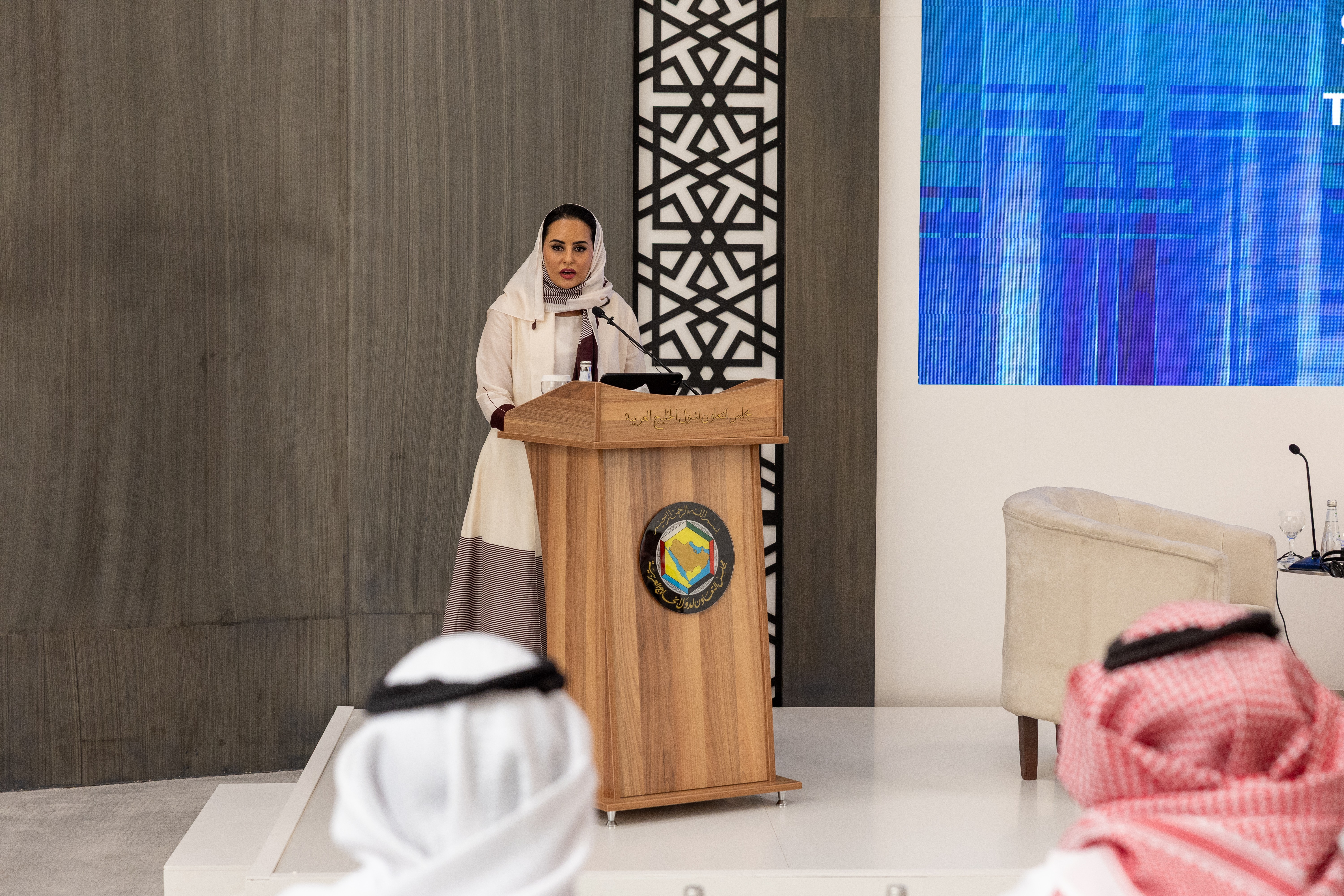
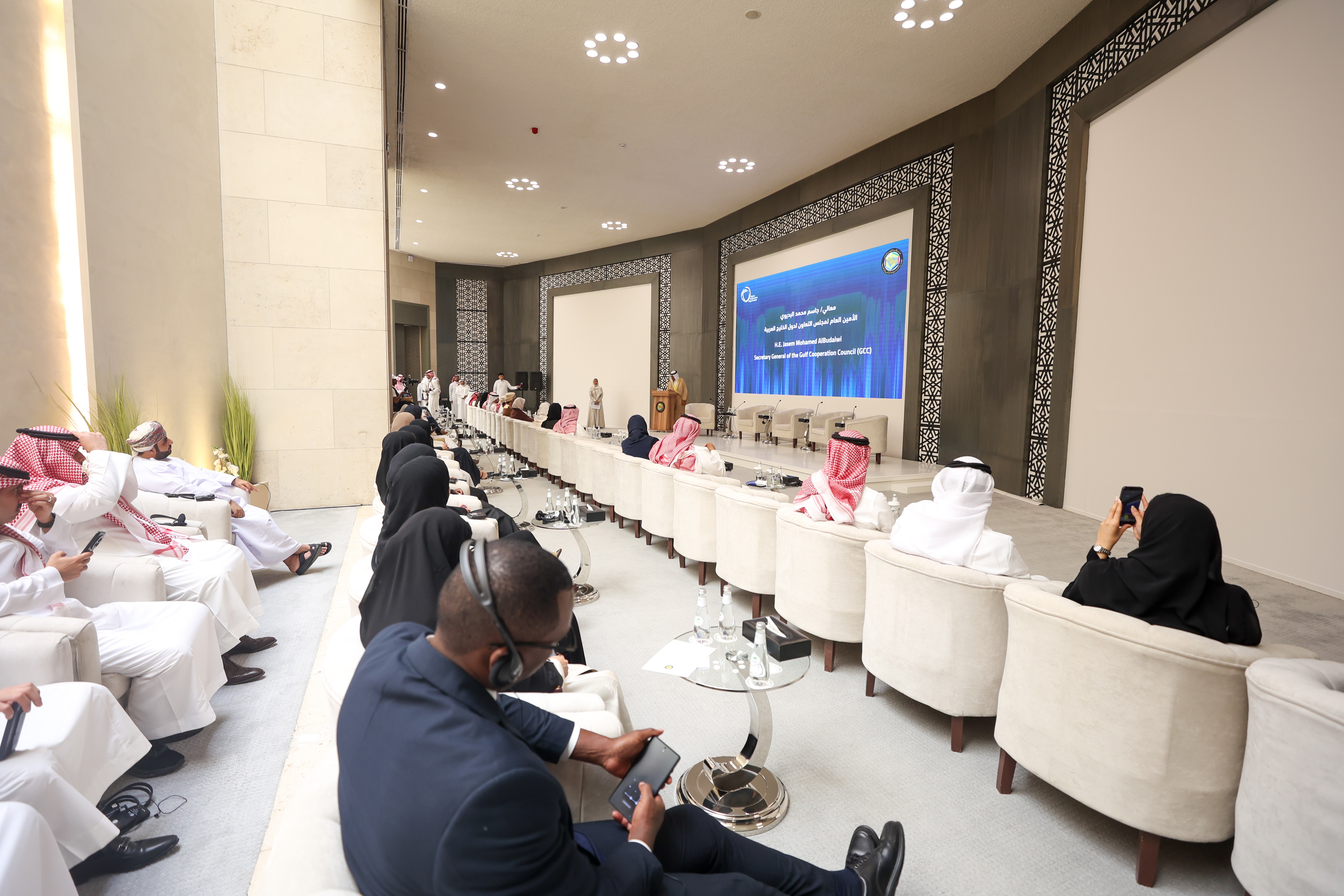
His Excellency's statement was made during a dialogue session to exchange views on the outcomes of the roundtable sessions held in cooperation with the Digital Cooperation Organisation (DCO), today, Thursday, August 28, 2025, at the General Secretariat headquarters in Riyadh. The event was attended by Her Excellency Ms Deemah AlYahya, Secretary General of the DCO, and a number of experts and specialists.
At the beginning of his speech, His Excellency the GCC Secretary General extended his sincere thanks and appreciation to the GCC member states for their active participation in the success of these sessions.
His Excellency also thanked the DCO Secretariat for its commendable efforts in supporting and enhancing the digital economy worldwide and its significant efforts in backing the GCC states.
His Excellency noted that this event comes as an implementation of the decision made by the Ministerial Committee for Digital Government at its eighth meeting (October 2024) and falls under the umbrella of the existing partnership between the GCC and the DCO.
His Excellency mentioned that the issues discussed during the day—related to empowering women in information technology, cultural values and misinformation, e-waste management, and the model legal framework for startups—represent core pillars in the GCC states' journey towards sustainable development and digital and economic transformation.
"These topics are fundamentally aimed at building an integrated system that balances the requirements of the digital age, protects the environment, preserves cultural identity, and enhances the role of innovation and entrepreneurship in diversifying the economy," His Excellency explained.
Moreover, he highlighted that empowering women in the field of information technology is an essential and unignorable element, as Gulf women have demonstrated a distinguished presence in many fields. He stressed the necessity of redoubling efforts to integrate them more strongly into the technology and digital innovation sectors.
"Empowering women in this field is not only a human rights or social dimension but also a strategic investment in half of society, which enhances the global competitiveness of the GCC states. This can be achieved through specialised training and qualification programmes in artificial intelligence, cybersecurity, and data analysis; encouraging female entrepreneurship in the emerging technology sector; providing incentives for companies that attract and support the careers of female talent; and building regional platforms to showcase the successes of women in the digital field, thereby inspiring and motivating younger generations," His Excellency further added.
His Excellency Mr Albudaiwi also pointed out that misinformation has evolved from being merely a side effect of the digital age to a first-degree global challenge.
"The World Economic Forum's 2024 Global Risks Report ranked misinformation as the most significant short-term threat to global stability, while the Reuters 2025 Digital News Report showed that 58% of internet users worldwide are unsure if they can distinguish between true and false information online," His Excellency highlighted.
"With the GCC states' wide openness to the world, preserving Islamic and Arab identity, strengthening family solidarity, and consolidating Gulf values and belonging are essential for creating an intelligent balance between authenticity and modernity. This is achieved by protecting heritage and values while keeping pace with global changes. Herein lies the importance of cultural, educational, and media policies that support the Gulf identity and fortify future generations against the challenges of rapid openness," His Excellency underlined, adding: "On the economic front, the model legal framework for startups constitutes the cornerstone for supporting innovation and entrepreneurship. Today, the world competes to attract minds, talents, and innovative ideas, and the GCC states can only be a pivotal player in the global digital economy through a flexible, attractive, and cross-border legal environment. Adopting a unified Gulf model framework for startups will contribute to removing bureaucratic obstacles, facilitating financing, and protecting intellectual property, allowing for the growth of companies capable of competing regionally and internationally. This, in turn, enhances the position of the Gulf states as a global hub for innovation and the new economy,"
In this comprehensive context, His Excellency addressed the issue of e-waste, which is a growing challenge in all countries, including the GCC states, due to the significant growth in the consumption of digital devices and reliance on them in all areas of life. This challenge, he noted, should not be viewed merely as an environmental burden but as a strategic opportunity to boost the digital economy through recycling.
"E-waste can be transformed from a polluting problem into an economic resource rich in rare minerals and precious materials if managed properly through integrated policies, advanced infrastructure, and community awareness campaigns," His Excellency stated.
His Excellency the Secretary General also explained that the future of the GCC states lies in their ability to combine sustainable development on one hand, with empowering all segments of society, safeguarding cultural identity, and supporting innovation and entrepreneurship on the other.
He stressed that the success of this equation requires close cooperation among all parties and regional coordination that reflects the unity of Gulf orientations, enabling them to chart a balanced path towards a prosperous digital economy, a society with a cohesive identity, and a sustainable environment, which reflects the importance of the partnership between the GCC and the DCO.
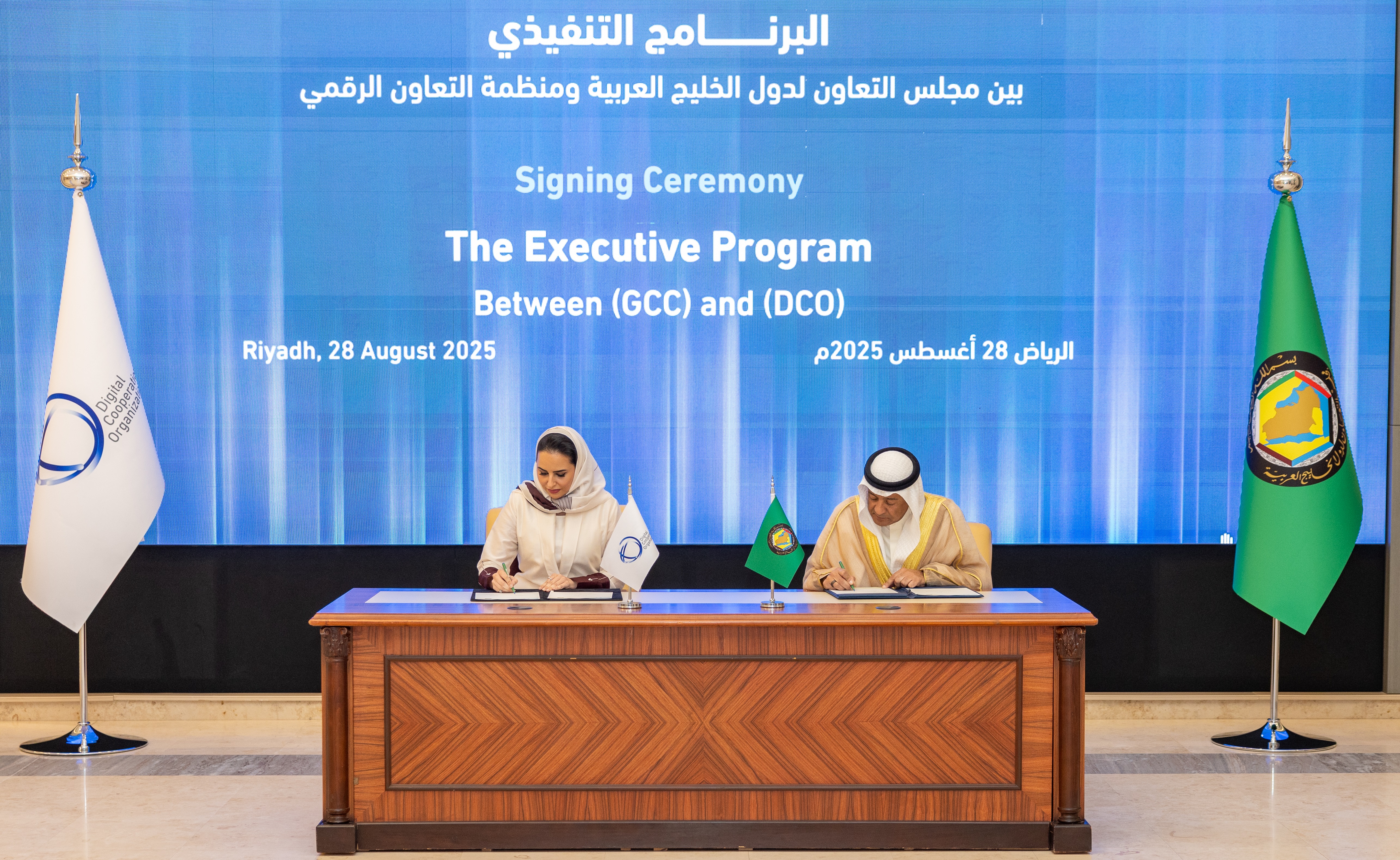
On the sidelines of the dialogue session, an executive programme was signed to guide joint work on data governance, artificial intelligence, digital government, and regional participation until 2026. The programme ensures the continued activation of the existing Memorandum of Understanding (MoU) and helps define a roadmap for achieving shared cooperation priorities between the General Secretariat of the GCC and the DCO.