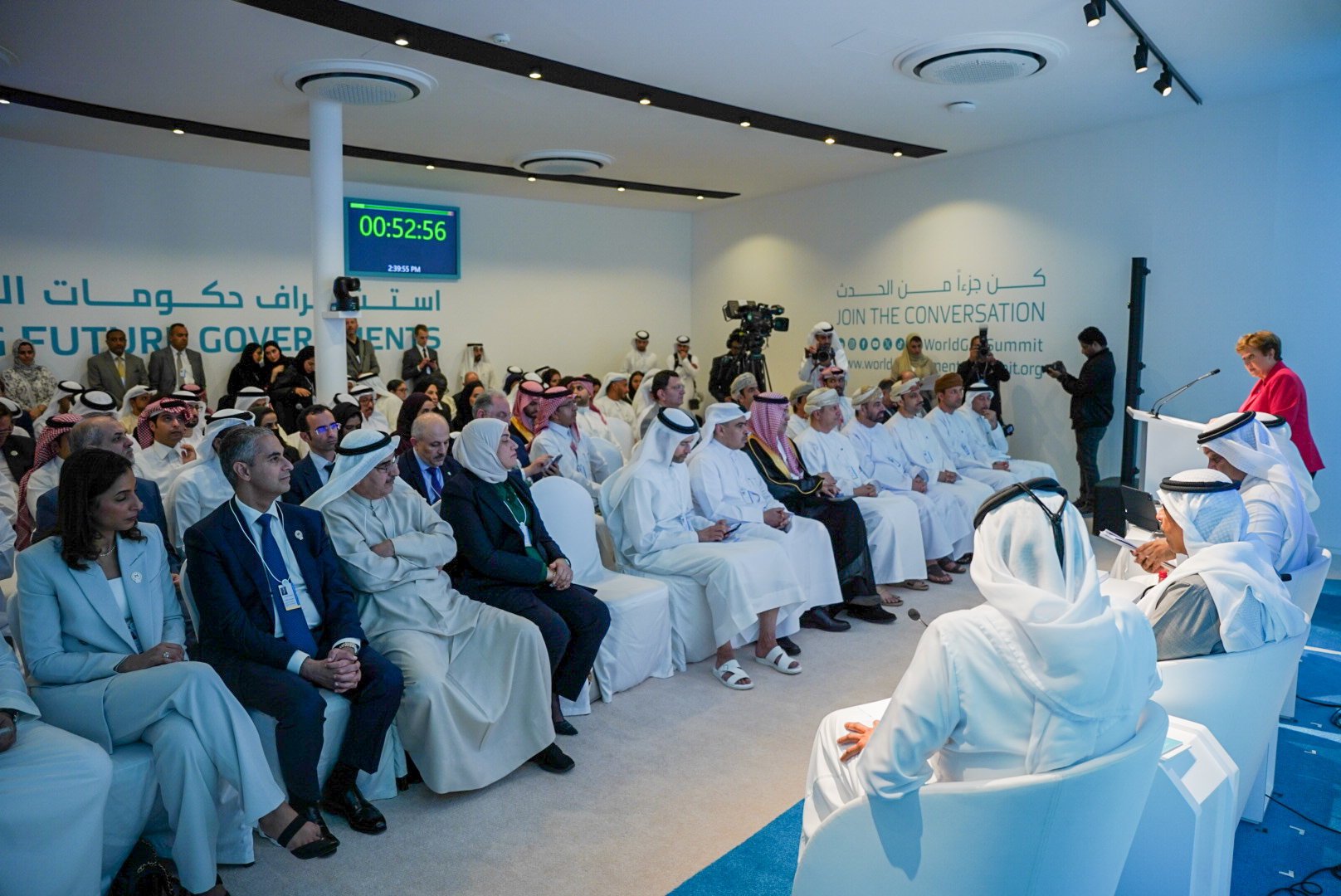
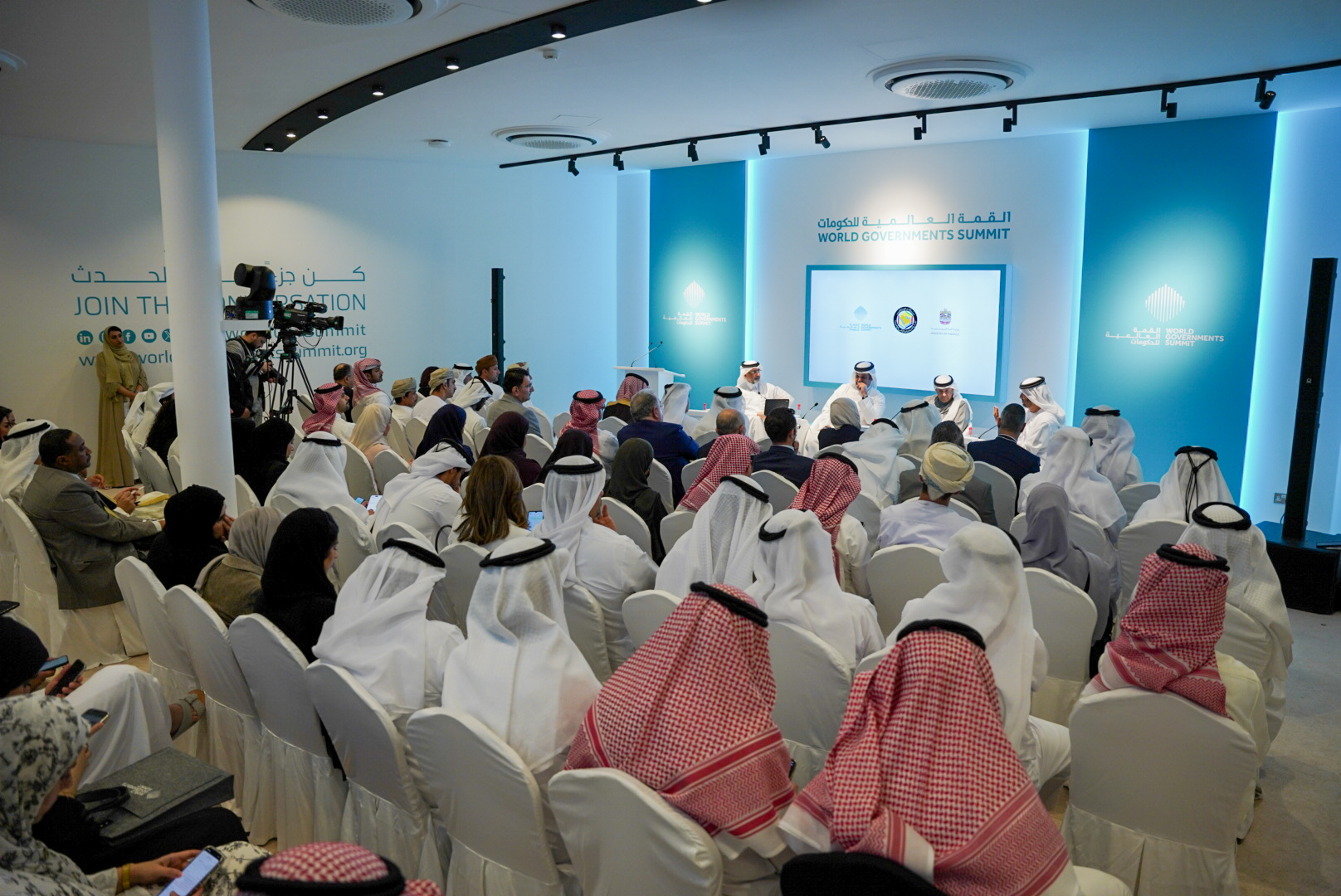
His Excellency Mr Jasem Mohamed Albudaiwi, Secretary General of the Gulf Cooperation Council (GCC), stated that the late founding leaders of the Council established a roadmap for Gulf integration since the Council's inception, built on several stages to achieve Gulf cooperation and integration, which has been further developed by the current leaders of the Council.
This was said during a panel session organised by the General Secretariat of the GCC in coordination with the Ministry of Finance of the United Arab Emirates, titled "Enhancing Resilience: Designing the Future of the GCC Economies Amid Regional and Global Challenges," held on the sidelines of the World Governments Summit 2025 today, Tuesday, February 11, 2025, in Dubai, United Arab Emirates (UAE).
The session featured the participation of His Excellency Mr Mohamed Al Hussaini, the UAE's Minister of State for Financial Affairs, His Excellency Mr Abdullah bin Touq Al Marri, Minister of Economy of the UAE, His Excellency Shaikh Salman bin Khalifa Al Khalifa, Minister of Finance and National Economy of the Kingdom of Bahrain, and Ms Kristalina Georgieva, Managing Director of the International Monetary Fund.
During his remarks, His Excellency the Secretary General discussed the background of Gulf cooperation and integration, noting that since the establishment of the Council, cooperation among member states has gone through several phases, starting with the creation of a free trade area, followed by the launch of a customs union among the member states.
"In 2008, the GCC moved towards a common market, allowing for the free movement of goods, services, capital, and labour within the region, which increased economic integration and created a larger market," he stated, stressing the importance of concerted efforts to complete the necessary steps to reach the final status of the customs union and achieve all required steps for the common Gulf market.
He also pointed out that the GCC has implemented several initiatives aimed at enhancing economic diversification and sustainable development, stimulating innovation, providing an investment environment, and achieving comprehensive development, in addition to joint Gulf projects aimed at enhancing productive linkages between member states and accomplishing economic integration.
"These initiatives include adopting integrated economic policies among member states in infrastructure projects and essential services such as transport, communications, electricity, information technology, health, education, tourism, and the oil and gas industry," His Excellency stated.
Furthermore, His Excellency addressed the efforts of the GCC states and their commitment to continue supporting the principle of promoting international peace, security, stability, and sustainable development in the region and around the world. He highlighted the importance of enhancing international cooperation to address current global challenges and achieve peace and sustainable development, stressing the GCC's commitment to resolving conflicts peacefully, respecting the sovereignty of states, and enhancing the international system to meet the aspirations and needs of current and future generations.
He noted that the GCC states have witnessed significant structural developments over the past period, transitioning from economies primarily reliant on oil to more diversified and resilient economies.
"Economic reforms have contributed to improving the business environment, attracting investments, and enhancing the role of the private sector in development in the GCC. The region has also seen advancements in infrastructure, financial systems, and economic legislation, strengthening its ability to adapt to global changes," His Excellency said, explaining further: "The GCC states aim to achieve sustainable structural transformation by supporting innovation, enhancing manufacturing industries, developing the services sector, and investing in modern technologies. The shift towards a digital economy and the development of smart infrastructure have become essential components of future growth strategies, contributing to enhancing the global competitiveness of our countries."