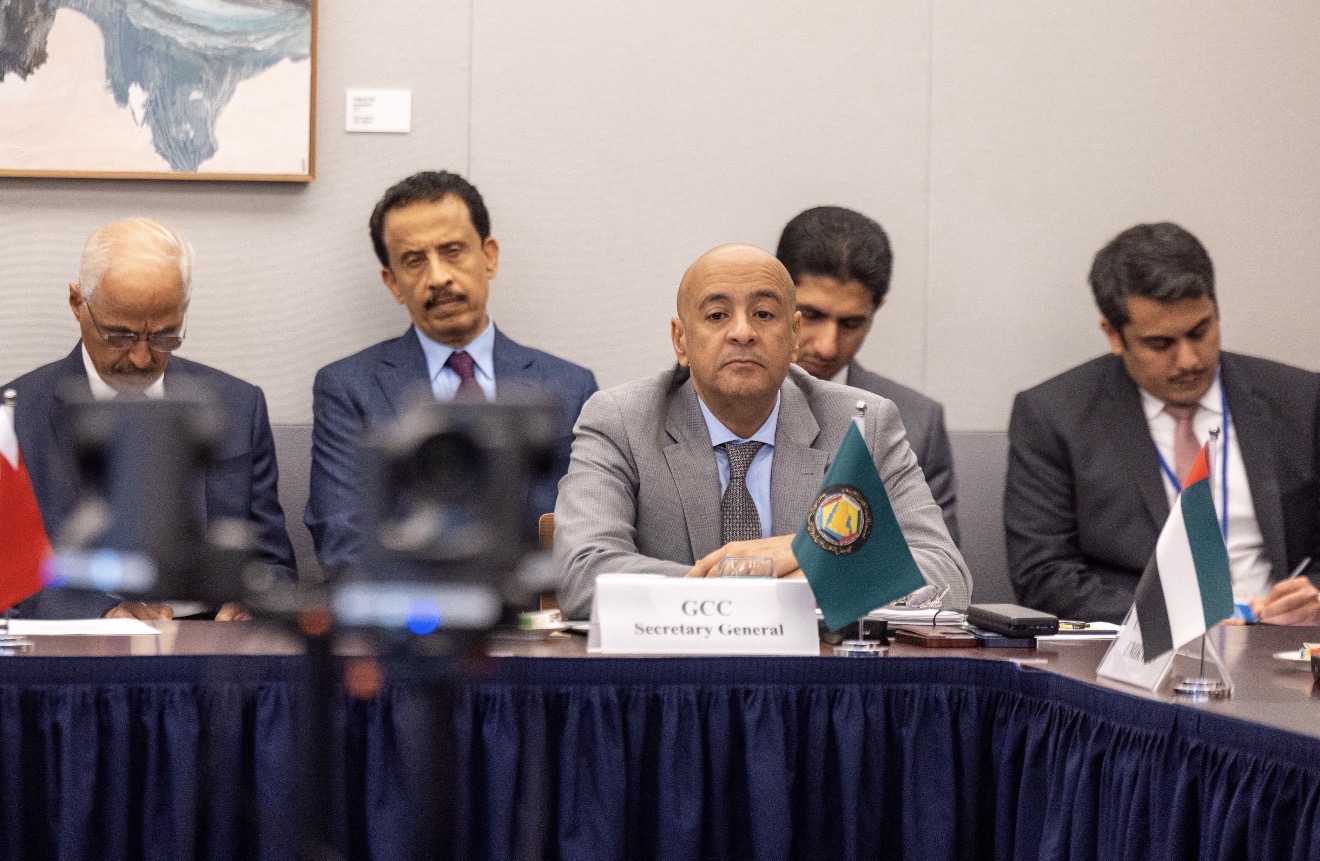
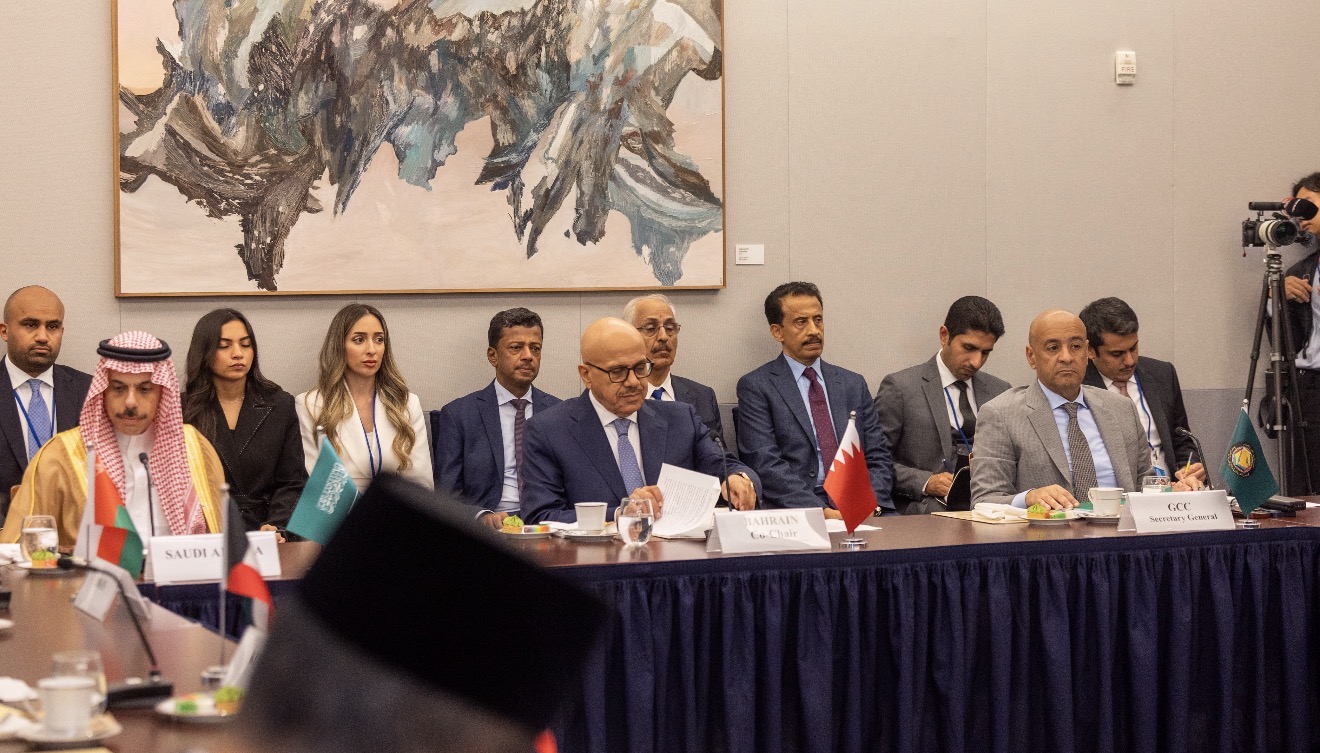
His Excellency Mr Jasem Mohamed Albudaiwi, Secretary General of the Gulf Cooperation Council (GCC), underscored that the convening of the GCC-ASEAN Joint Ministerial Meeting builds upon the momentum generated by the historic GCC-ASEAN Summits held in Riyadh in 2023 and Kuala Lumpur in 2025, which significantly advanced avenues of partnership between both sides toward broader horizons.
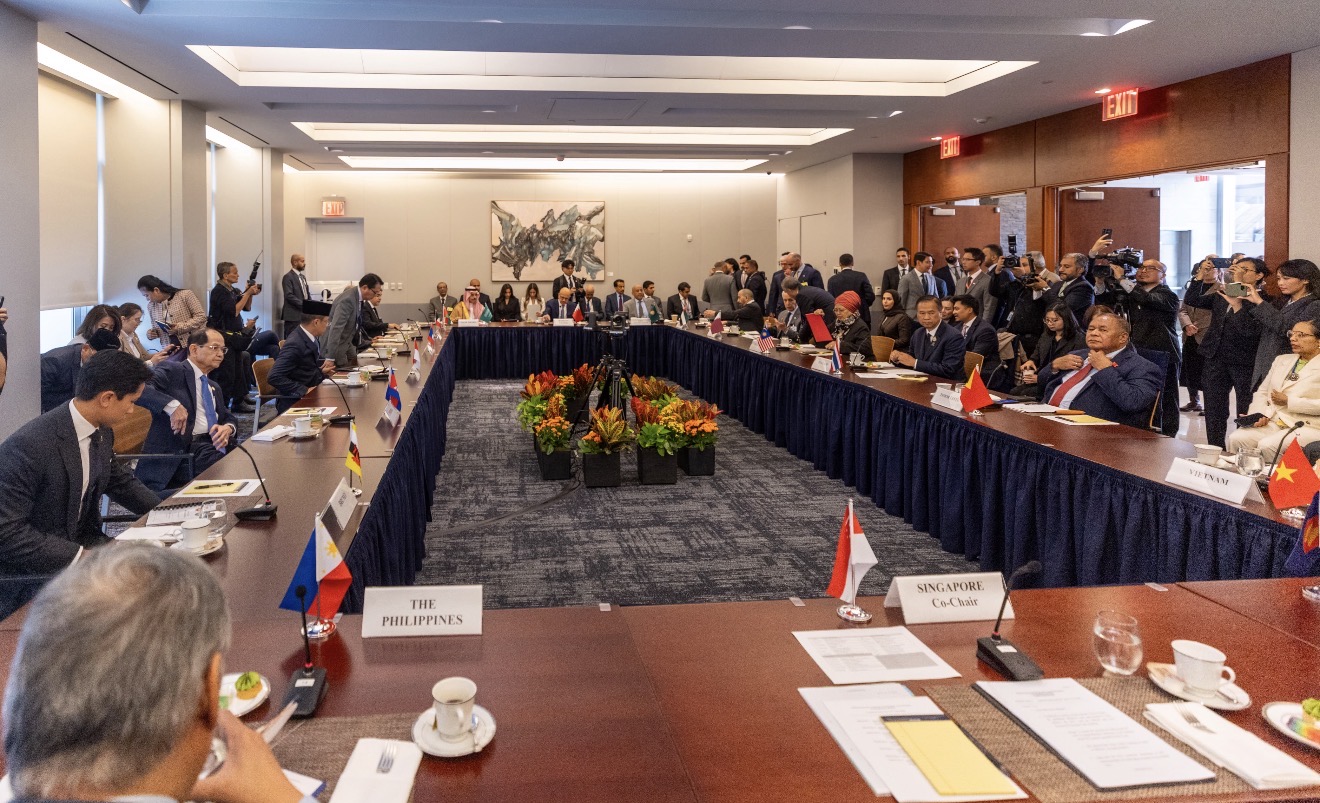
His Excellency's remarks were delivered during the Joint Ministerial Meeting between the GCC and the Association of Southeast Asian Nations (ASEAN), held on Wednesday (23 September 2026) on the margins of the 81st session of the United Nations General Assembly (UNGA) in New York. The meeting was co-chaired by His Excellency Dr Abdullatif bin Rashid Al Zayani, Minister of Foreign Affairs of the Kingdom of Bahrain and Chairman of the current session of the GCC Ministerial Council, and His Excellency Dr Vivian Balakrishnan, Minister for Foreign Affairs of the Republic of Singapore, with the participation of Their Highnesses and Excellencies the Ministers of Foreign Affairs of GCC and ASEAN member states.
"Relations between GCC states and ASEAN countries are deeply anchored and historic, undergoing sustained growth that reflects a mutual determination to solidify strategic ties and broaden cooperation to serve the interests of their peoples and advance stability and shared prosperity across both regions," His Excellency noted.
His Excellency further explained: "The General Secretariats of the GCC and ASEAN have held numerous consultative sessions to develop joint frameworks, alongside specialised working groups across political, security, economic, commercial, and developmental tracks, in addition to harmonising stances on key regional and international matters within multilateral forums."
Turning to regional developments, His Excellency stated that since 28 February 2026, GCC member states have been subjected to more than 7,000 ballistic missile and drone attacks launched by Iran and its proxies, targeting critical civilian infrastructure and inflicting casualties alongside severe material damage. He emphasised that GCC states were not party to the hostilities, but had actively undertaken vigorous mediation efforts and exercised the utmost restraint to prevent further escalation.
"Iran’s disruption of international maritime navigation and the closure of the Strait of Hormuz constitute a flagrant violation of the 1982 United Nations Convention on the Law of the Sea (UNCLOS)," His Excellency added, pointing out that the ramifications of these actions extend far beyond the immediate region. "They directly threaten global supply chains and impact economies worldwide, including ASEAN member states," His Excellency underlined.
Furthermore, His Excellency reiterated the firm stance of the GCC demanding Iran’s full compliance with UN Security Council Resolution 2817, an immediate, permanent, and unconditional cessation of all attacks with verifiable guarantees of non-recurrence, and the full restoration of unhindered navigational freedom across the Straits of Hormuz and Bab Al-Mandab to their pre-28 February 2026 status.
He firmly rejected any unilateral measures imposing fees, levies, or conditions on the right of transit passage, emphasising that Iran must bear full legal accountability and provide complete reparations for the damages resulting from its attacks.
Concluding his address, His Excellency expressed confidence that reinforcing GCC-ASEAN cooperation amidst current global dynamics will yield constructive momentum for joint action. He urged technical working groups to intensify their efforts to expand collaborative fields for mutual benefit, underscoring that this ministerial gathering serves to elevate Gulf-Southeast Asian relations to higher levels of strategic coordination.