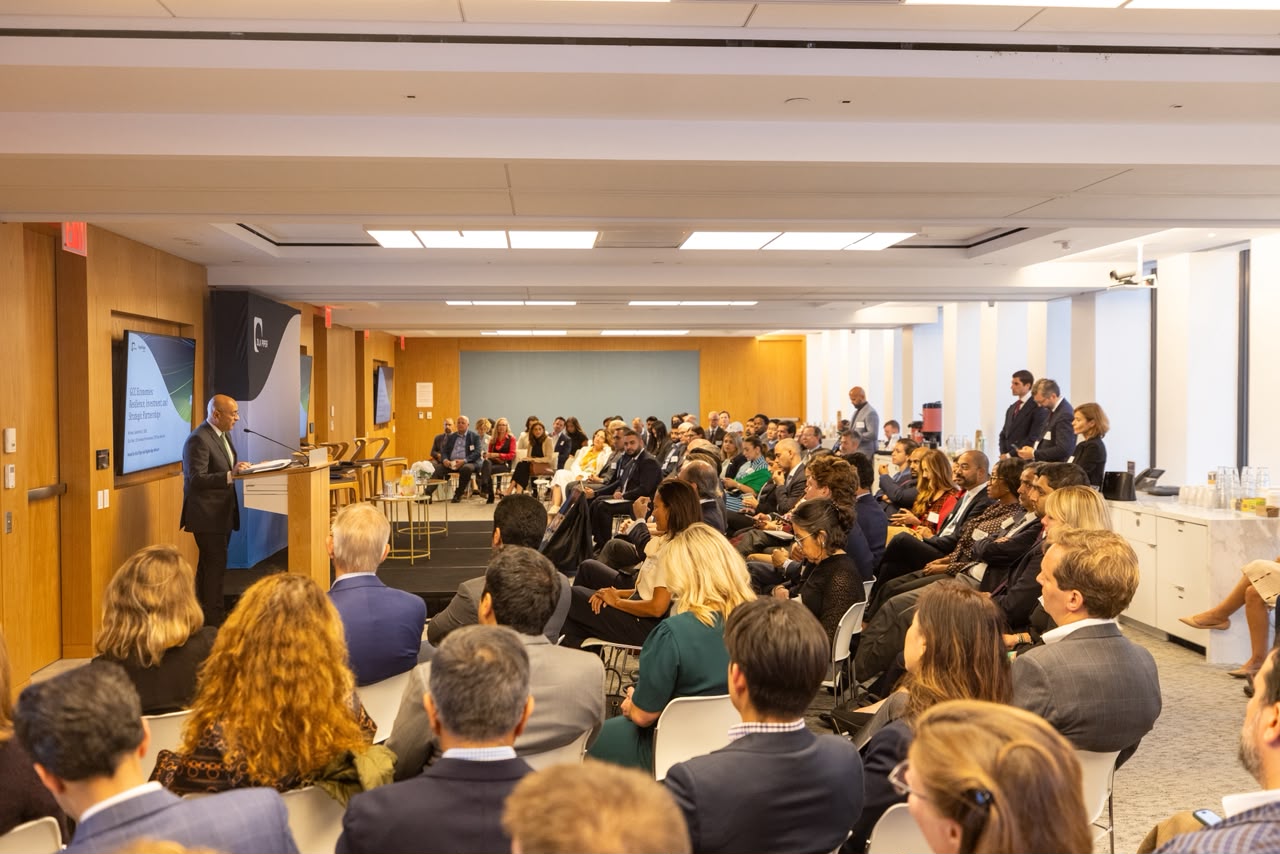
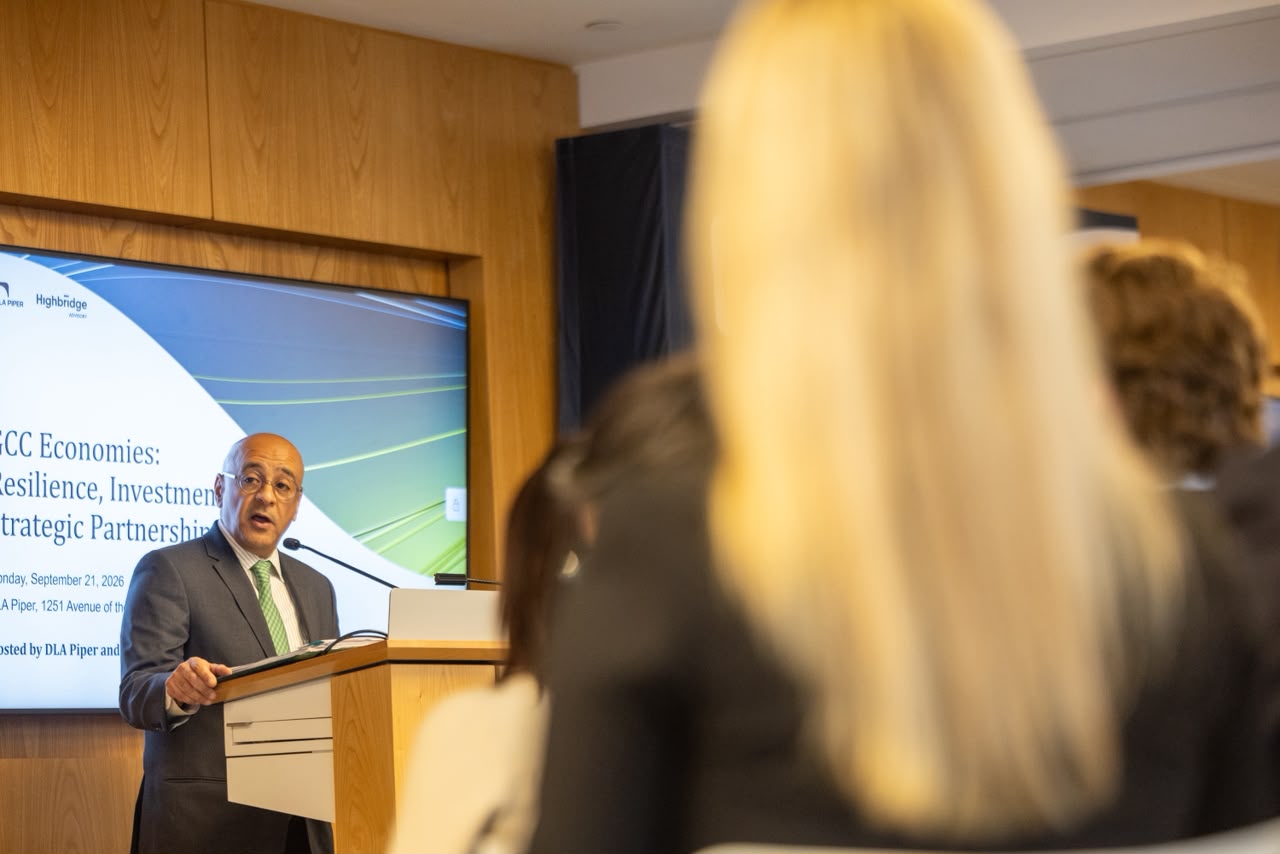
His Excellency Mr Jasem Mohamed Albudaiwi, Secretary General of the Gulf Cooperation Council (GCC), underscored that GCC member states have successfully built a robust economic, financial and investment foundation, cementing their capacity to adapt to global transformations and solidifying their position as a premier worldwide destination for capital and long-term international partnerships.
HE the Secretary General’s remarks were delivered during a panel discussion titled "GCC Economies: Resilience, Investment, and Strategic Partnerships", co-organised by DLA Piper and Highbridge Advisory in New York on Monday (September 21, 2026), convened on the sidelines of the 81st session of the United Nations General Assembly (UNGA).
"The global economy is witnessing rapid structural shifts driven by geopolitical developments and the reconfiguration of trade flows and supply chains, alongside technological disruption and intensifying international competition for capital, technology, and talent. The GCC member states' economic resilience extends far beyond crisis management to encompass cultivating dynamic economies capable of sustaining growth, driving diversification, and attracting investment, all while preserving institutional confidence and openness to the world," His Excellency stated.
Moreover, His Excellency highlighted key macroeconomic indicators, noting that the combined gross domestic product (GDP) of GCC member states stands at approximately USD2.4 trillion, while sovereign wealth fund (SWF) assets exceed USD5 trillion and commercial banking assets reach around USD3.9 trillion.
"The GCC's merchandise trade with the world amounts to nearly USD1.6 trillion. These substantial financial resources underpin the region’s economic transformation, propelled by strategic investments in manufacturing, technology, artificial intelligence (AI), clean energy, logistics, tourism, financial services, and infrastructure," HE the Secretary General explained.
Additionally, His Excellency indicated that the foreign direct investment (FDI) inward stock in GCC countries reached approximately USD792.7 billion in 2025. He stressed that the Council's investment paradigm is not measured solely by capital inflows, but by the qualitative value ventures generate, facilitating technology transfer and knowledge exchange, boosting productive capacities, deepening domestic value chains, and creating high-value employment opportunities.
"The Gulf economic integration serves as a foundational pillar for enhancing the region’s global competitiveness," His Excellency pointed out, stating that approximately USD171.4 billion of the inward FDI stock in 2025 originated from within the GCC itself, accounting for nearly 22% of the total, reflecting vibrant intra-regional capital flows and cross-border commercial synergy.
He added that strategic milestones, including the Customs Union, the Gulf Common Market, the power grid interconnection, cross-border payment integration, digital alignment, and the GCC Railway project, constitute vital instruments for expanding the unified market, expediting trade and capital movement, and optimising supply chain efficiencies. His Excellency reaffirmed that Gulf integration is not merely an economic framework among six sovereign nations, but a collective competitive advantage in the global economy.
Meanwhile, HE the Secretary General also affirmed that the international partnerships of the GCC states have moved beyond traditional frameworks in the fields of trade and energy to include investment, technology, AI, advanced industries, clean energy, infrastructure, logistics, food security and supply chains.
He commented: “Diversifying markets, partnerships, and sources of investment, technology and knowledge strengthens the ability of GCC economies to deal with global transformations.”
Elaborating further, HE the Secretary General stated: “The strategic location of the GCC states, along with their advanced ports, airports, logistics networks, financial institutions and significant investment capabilities, qualifies them to play a pivotal role in connecting markets, capital, supply chains and investment opportunities. This is in addition to contributing to development and reconstruction efforts by utilising their investment and financing capabilities, infrastructure, energy and logistics services in partnership with international expertise.”
His Excellency concluded his speech by affirming that the GCC states are open to building new and long-term partnerships based on mutual investment, the transfer of technology and knowledge, project development, and the creation of more integrated and resilient value chains.
He expressed the GCC states’ aspiration to work with investors, financial institutions and international companies, not only to invest in existing opportunities, but also to create new opportunities in the sectors that will shape the economy of the future, in a manner that achieves shared value and sustainable long-term growth.