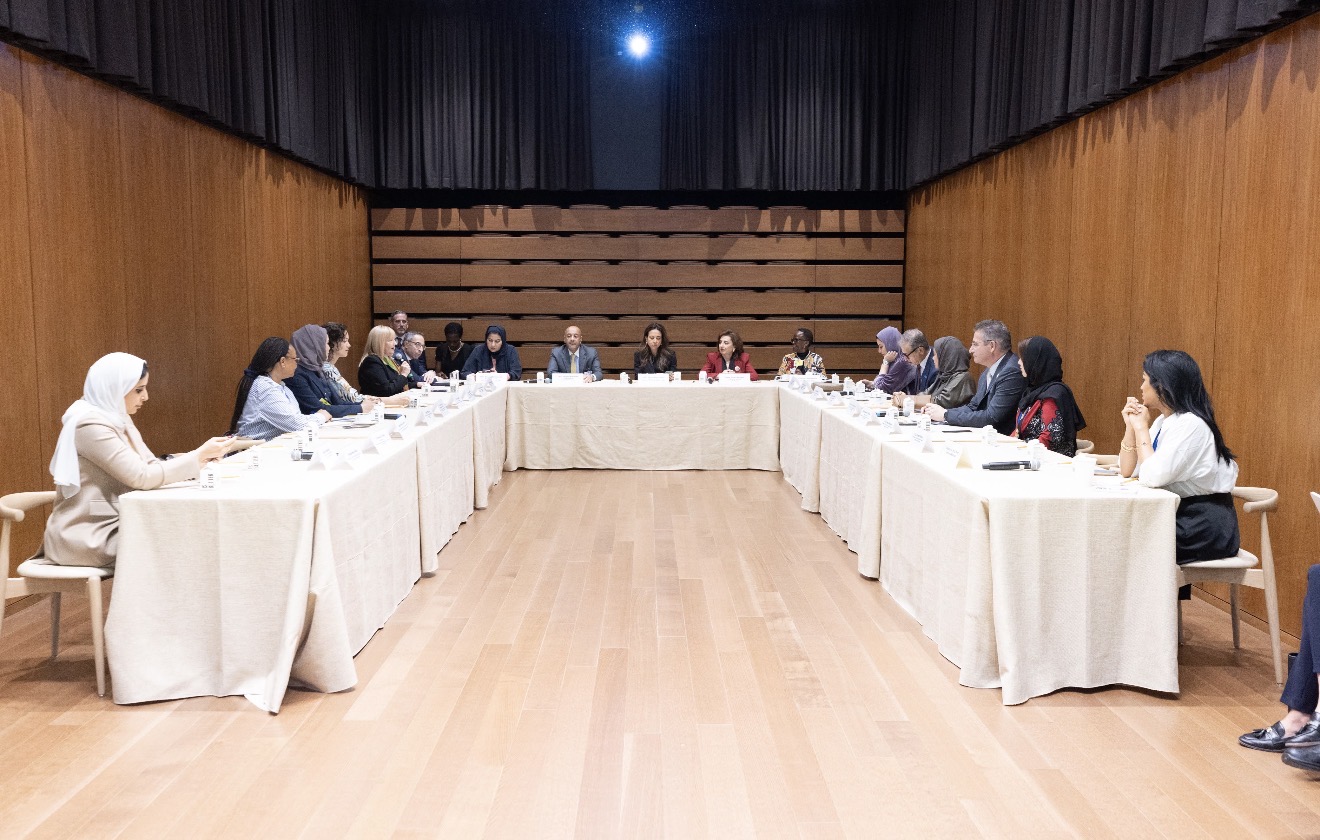
His Excellency Mr Jasem Mohamed Albudaiwi, Secretary General of the Gulf Cooperation Council (GCC), affirmed that women’s engagement in peace and security transcends mere representation, constituting an indispensable foundation for building more peaceful, stable, and resilient societies. He underscored the critical importance of expanding women’s presence and active involvement across decision-making, negotiations, mediation, and peacebuilding processes.
His Excellency’s remarks were delivered during his address at the high-level event titled "Shaping the Next 25 Years: Advancing Women’s Leadership in Peace and Security", held on Friday (25 September 2026), organised and hosted by the Permanent Mission of the United Arab Emirates (UAE) to the United Nations (UN) in New York, in partnership with UN Women.
At the outset of his address, His Excellency the Secretary General expressed his appreciation to the UAE for convening this vital event, commending UN Women for its dedicated efforts in driving the Women, Peace and Security (WPS) agenda and advancing women's leadership and meaningful participation in conflict prevention, peacemaking, peacebuilding, and sustaining peace.
His Excellency highlighted that GCC member states have achieved substantial progress in empowering women and reinforcing their contributions to sustainable development and governance. He pointed out that women constitute more than 40% of the public sector workforce across GCC states and over 39% in the private sector, while holding approximately 49% of public sector leadership positions and 31% in the private sector. Furthermore, he cited the adoption of the Joint GCC Action Strategy for Women’s Affairs (2024–2030), which provides a unified framework to bolster institutional cooperation and support women’s leadership and advancement.
"The GCC experience demonstrates the profound value of women's leadership through embedding female empowerment within national and regional strategies, investing in education and professional development, and expanding executive pathways," His Excellency explained. In this context, he noted the growing presence of Gulf women in diplomatic service as ministers, ambassadors, diplomats, and senior officials, reinforcing their instrumental role in mediation, preventive diplomacy, and peace negotiations.
Moreover, His Excellency praised the pioneering experience of the UAE in advancing the WPS agenda, being the first GCC state to launch a National Action Plan for the implementation of UN Security Council Resolution 1325 (UNSCR 1325), alongside its signature initiatives aimed at building women's capabilities in defence, security, and peacekeeping.
His Excellency underscored the necessity of investing in the next generation of female mediators, diplomats, and peacebuilders—especially young women—by equipping them with the requisite skills, professional networks, and opportunities to assume high-level leadership roles. He expressed the GCC’s keenness to broaden cooperation with UN Women across leadership development, capacity building, mediation, preventive diplomacy, crisis management, and humanitarian action.
Concluding his address, His Excellency the Secretary General reaffirmed the GCC's steadfast commitment to continue collaborating with member states, UN Women, and regional and international partners to elevate the contributions of Gulf women to the WPS agenda, while supporting global efforts toward a more peaceful, secure, and sustainable future. He emphasised that the overarching ambition for the forthcoming phase lies in transitioning from merely facilitating women's participation in peace efforts to anchoring their leadership in shaping and sustaining peace.