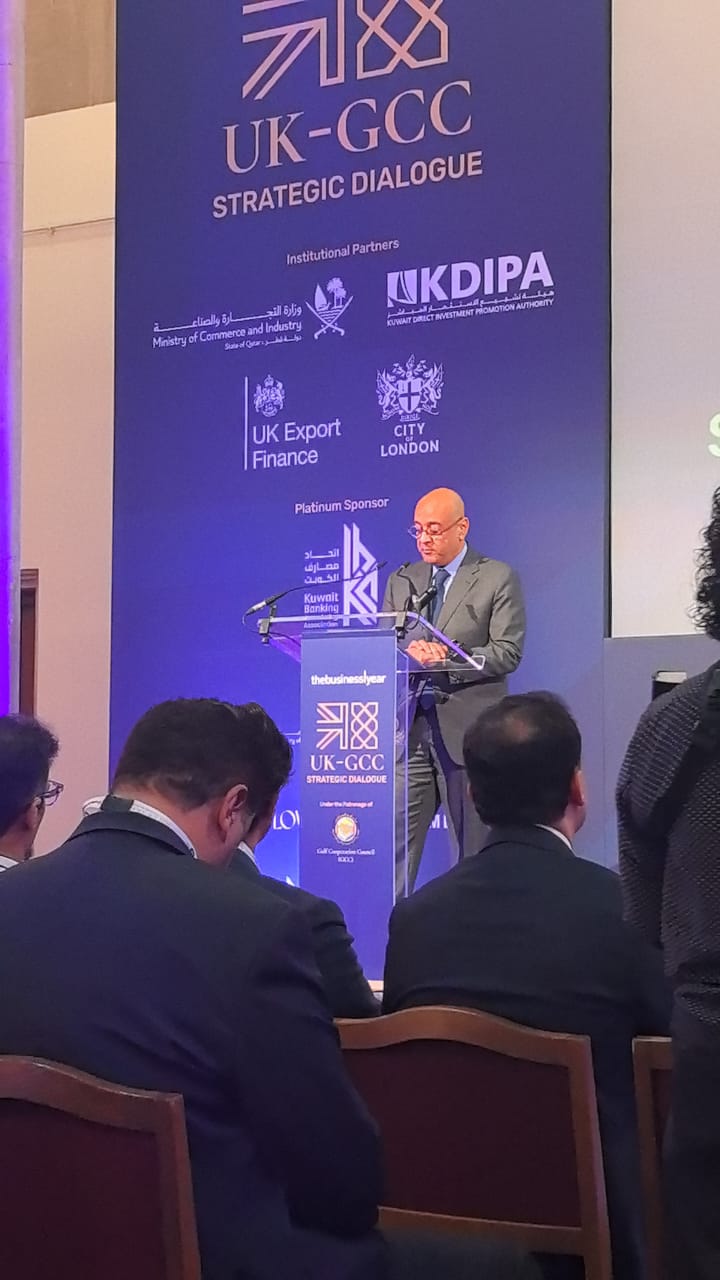
His Excellency Mr Jasem Mohamed Albudaiwi, Secretary General of the Gulf Cooperation Council (GCC), stated that relations between the GCC states and the United Kingdom (UK) are founded on a long history of cooperation, trust, and shared interests, which has contributed to exploring and establishing a distinguished economic and trade partnership between the two sides.
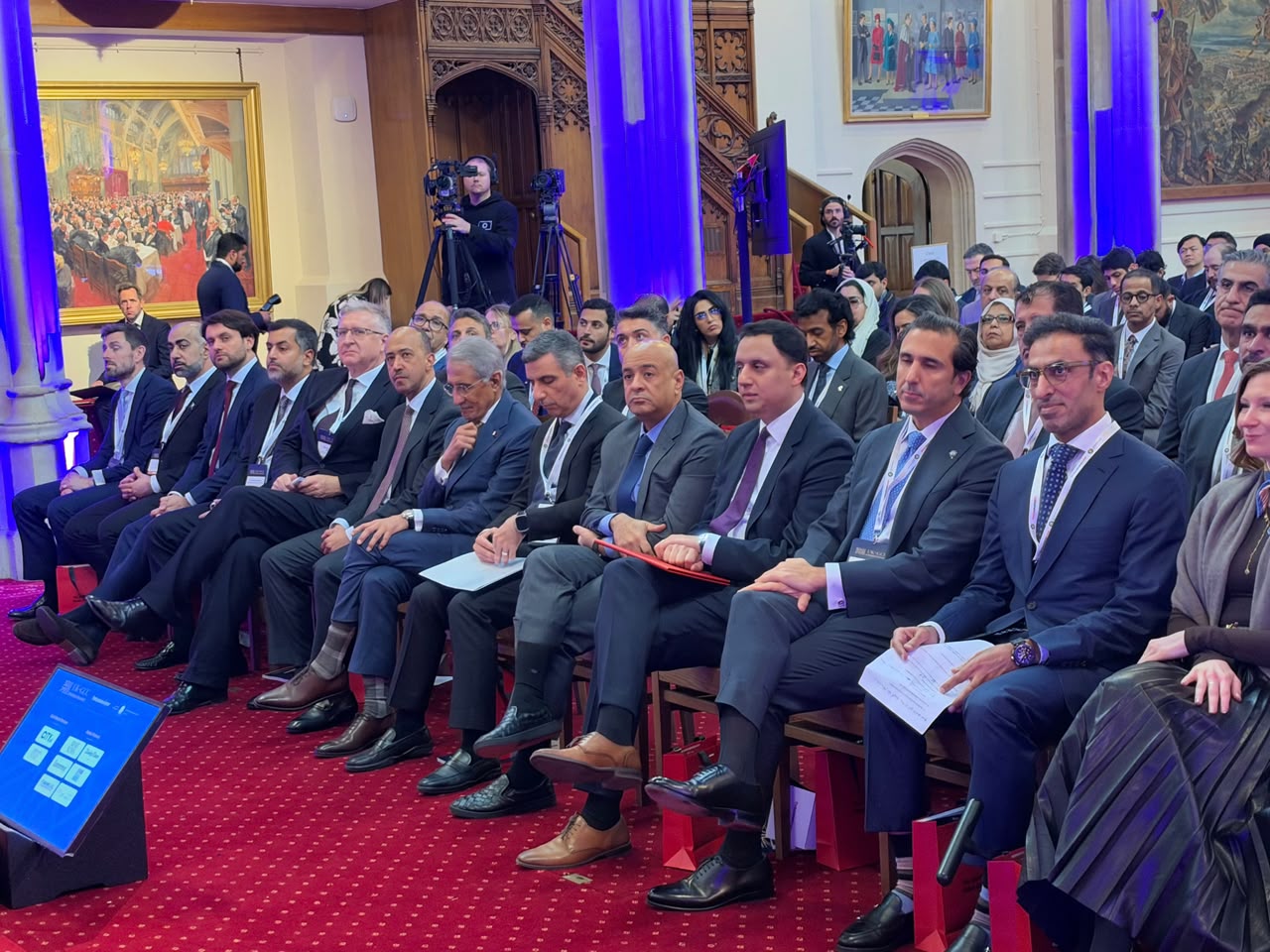
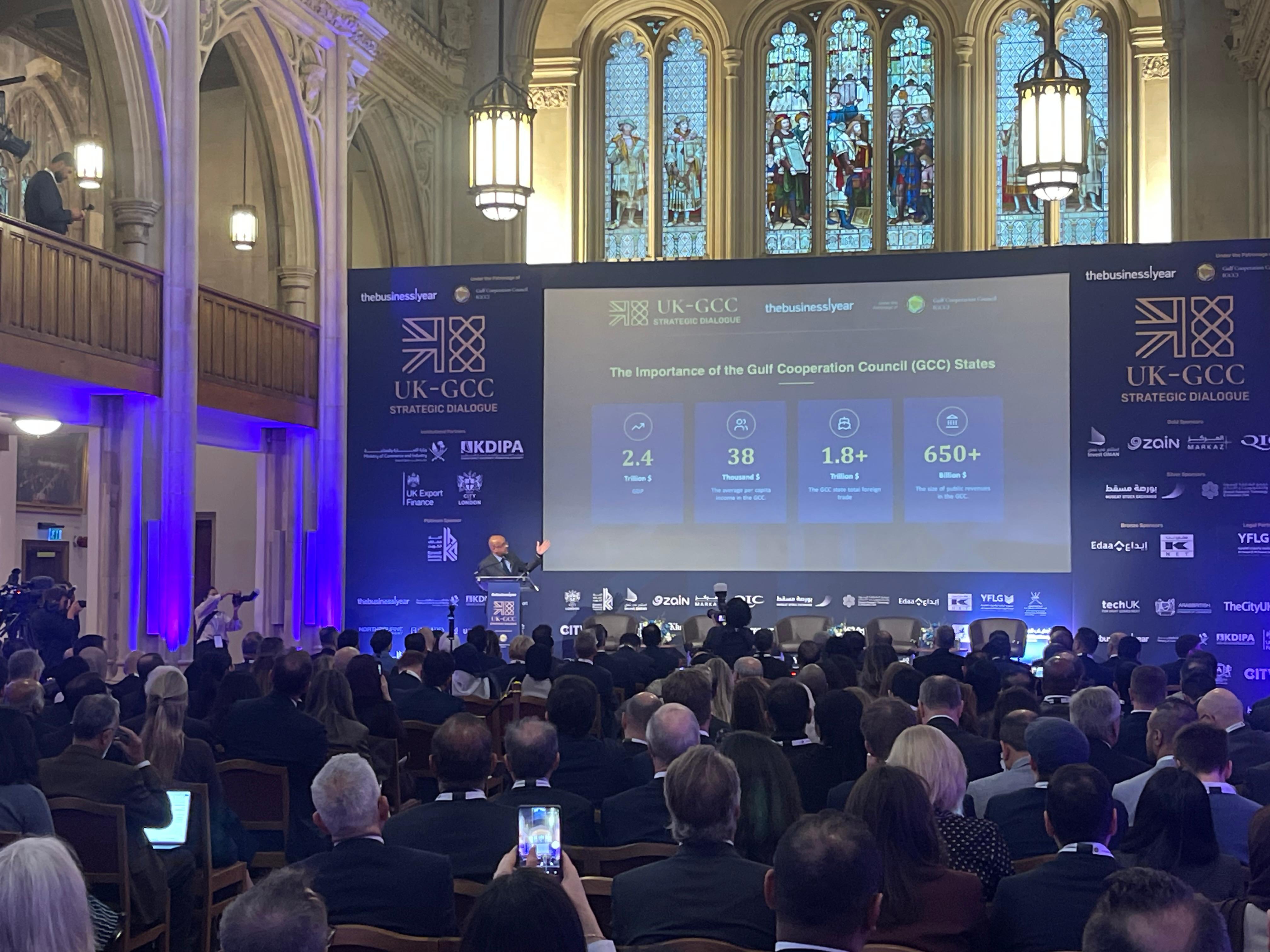
His Excellency’s remarks came during his opening speech at the GCC-UK Strategic Dialogue, on Tuesday, October 20, 2026, in the British capital, London, in the presence of several ministers from both sides, alongside numerous officials, business leaders, and investors.
During his speech, His Excellency the Secretary General stated that the foundations of the economic partnership between the two sides bring together the ambitious development visions of the GCC states and the UK’s extensive expertise and capabilities across a wide range of vital sectors. He noted that this partnership is acquiring growing significance amid global economic transformations, geopolitical developments, and the resulting challenges confronting trade, investment, and supply chains. His Excellency stressed that these developments underscore the importance of strengthening trusted economic partnerships and expanding the horizons of cooperation to support growth, stability, and shared prosperity.
In the same context, His Excellency added that, guided by the directives of Their Majesties and Highnesses the Leaders of the GCC states, the member states continue to advance towards achieving important goals in economic integration, diversifying productive bases, improving business environments, and empowering the private sector. "These goals are reflected in two key indicators: the combined Gross Domestic Product (GDP) of the GCC states reached approximately USD 2.4 trillion, placing them collectively among the world’s ten largest economies; and the total foreign trade of the GCC states exceeded USD 1.8 trillion, ranking them collectively fifth globally," His Excellency pointed out. He emphasised that these economic strengths, coupled with the advanced infrastructure and strategic location of the GCC states connecting global markets, have elevated their attractiveness as reliable international economic and trading partners.
His Excellency also highlighted other achievements, namely the remarkable progress the GCC states have made in developing smart cities and advancing sustainable urban development. He explained that these smart cities are designed to optimise energy consumption, reduce waste, and leverage artificial intelligence and the Internet of Things (IoT) to enhance the efficiency of urban management.
"These initiatives reflect the GCC countries’ strong commitment to sustainable and technologically advanced urban planning," His Excellency asserted. Furthermore, he indicated that the growing emphasis on cybersecurity aims to safeguard against emerging threats and maintain trust in the digital economy. This transformation, he explained, paves the way for a future in which technological innovation and digital integration drive economic growth, create quality technology-related employment opportunities, and attract leading global technology companies, thereby ensuring long-term economic stability and enhanced global competitiveness for the GCC states.
Moreover, His Excellency indicated that the UK is among the GCC’s key partners, with economic and investment relations experiencing continuous growth, as reflected in the facts: the total trade volume between the GCC states and the UK reached approximately USD 70 billion in 2025, making the GCC states collectively the UK’s tenth-largest trading partner; and the total value of investment assets and liabilities between the UK and the GCC reached approximately USD 643 billion in 2024, reflecting the depth of financial and investment ties between both sides.
"These figures and facts demonstrate the strength of GCC-UK economic relations and their promising potential for further growth and expansion," His Excellency pointed out.
Building on this, His Excellency stated that the conclusion of negotiations on the GCC-UK Free Trade Agreement (FTA) represents a strategic step towards building on these relations, establishing a broader framework to facilitate trade, encourage investment, and create new opportunities for the private sector.
His Excellency noted that the conclusion of the FTA negotiations is the fruit of sustained joint efforts and intensive negotiations that culminated in a comprehensive agreement covering a broad range of areas of mutual interest. He seized the opportunity to renew his sincere appreciation to the negotiating teams from both sides, and to all the institutions that contributed to this achievement through their commitment, cooperation, and determination to reach an ambitious agreement that serves mutual interests.
He highlighted that among the most significant expected benefits of this agreement is the elimination of customs duties on more than 99% of GCC exports to the UK, which will open broader horizons for increasing non-oil exports, particularly in the aluminium, fertiliser, and manufacturing sectors. He added that the agreement also provides opportunities to bolster the GCC’s position as a global hub for logistics and re-exports, while enabling small and medium-sized enterprises to expand their operations and increase their access to the British market. These advantages, he affirmed, will contribute to increasing bilateral trade and investment flows and deepening economic connectivity between the two sides.
His Excellency further underlined the importance of the FTA, noting that its benefits extend beyond trade to lay a more robust foundation for long-term economic and investment partnerships. This, he explained, will allow both sides to capitalise on their competitive advantages, particularly in sectors supporting economic diversification, productivity, and competitiveness, including advanced manufacturing, the digital economy and artificial intelligence, clean energy and sustainability, financial and investment services, education, food security, and logistics. He stressed that these sectors offer practical opportunities to transition the partnership from traditional trade to deeper economic integration based on joint investment, technology and knowledge transfer, building stronger productive capacities, and achieving greater value added for both sides.
Additionally, His Excellency elaborated that the conclusion of negotiations on the FTA marks an important milestone in the trajectory of relations between the GCC and the UK, yet the true value of this success will be measured by the joint projects it generates, the productive investments it attracts, and the economic opportunities it creates for both sides. This, he said, is where the importance of today’s forum lies; by bringing together policymakers, business leaders, and investors, it serves as a valuable platform to build on the progress achieved and explore and identify opportunities that can be translated into tangible economic partnerships.