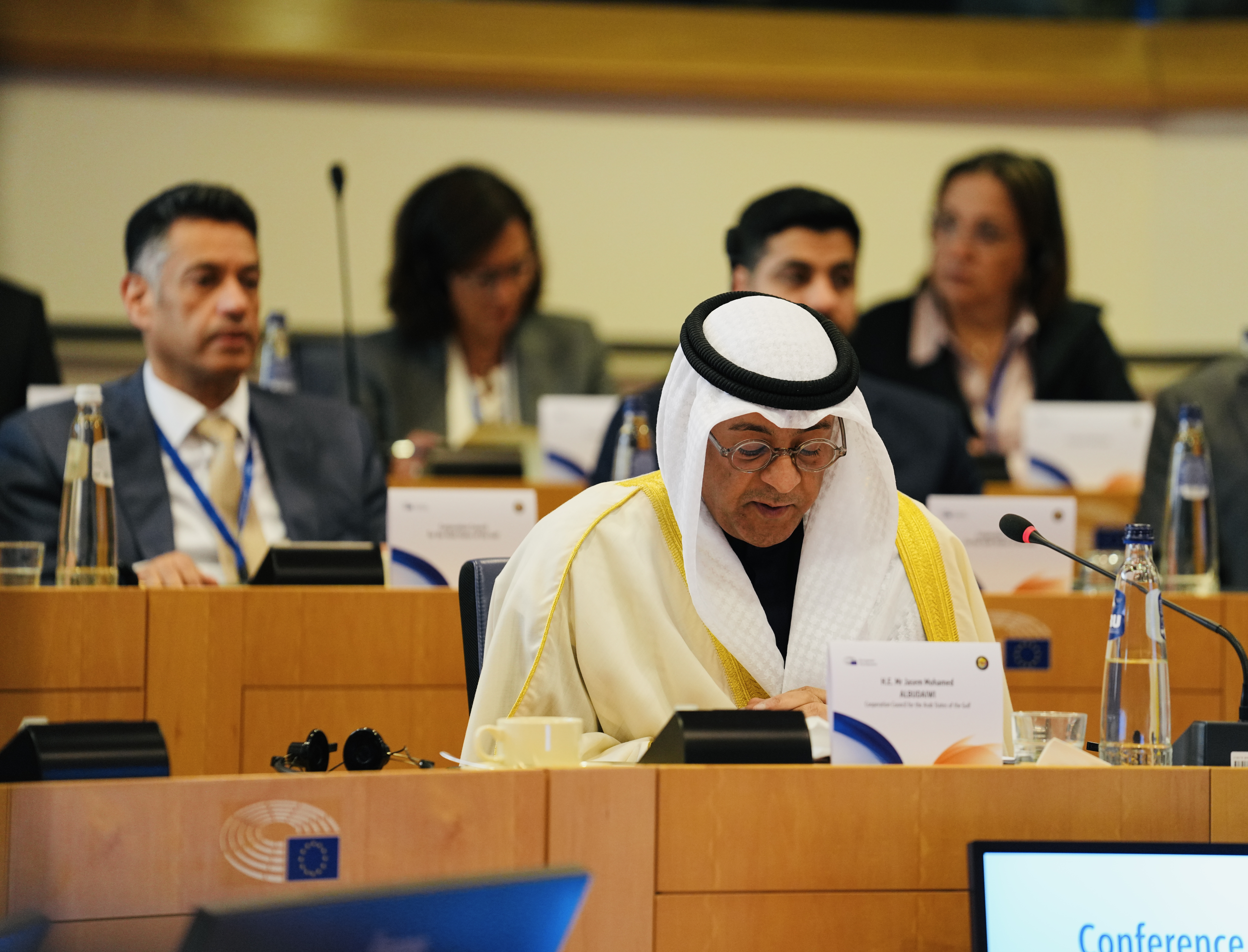
His Excellency Mr Jasem Mohamed Albudaiwi, Secretary General of the Gulf Cooperation Council (GCC), underlined that the strategic partnership between GCC member states and the European Union (EU) forms a fundamental pillar for bolstering security, stability, development, and shared prosperity. His Excellency stressed the importance of transitioning the GCC-EU parliamentary dialogue from the phase of reviewing opportunities to achieving tangible gains and milestones that benefit the peoples of both sides and bolster their capacity to address regional and international challenges.
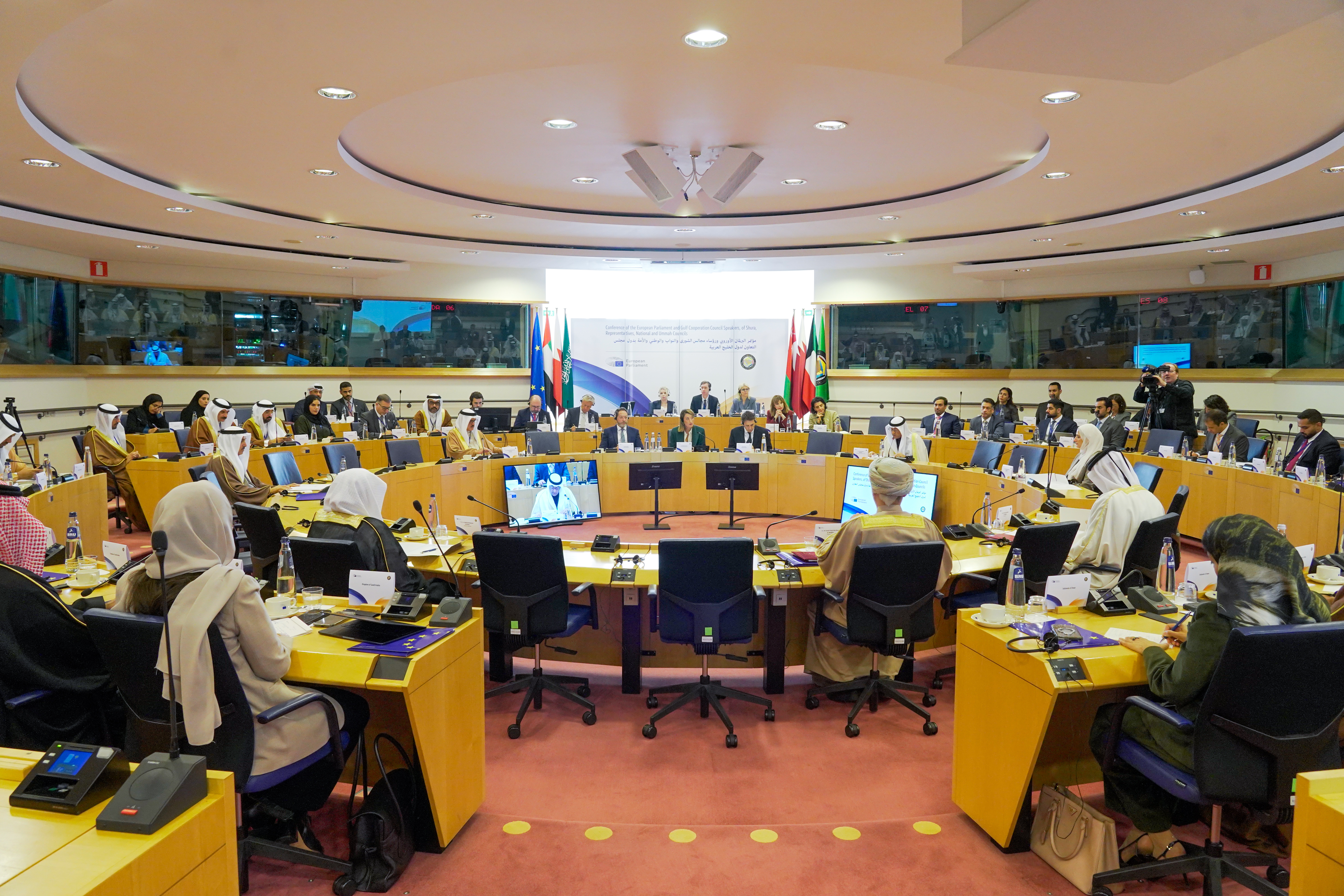
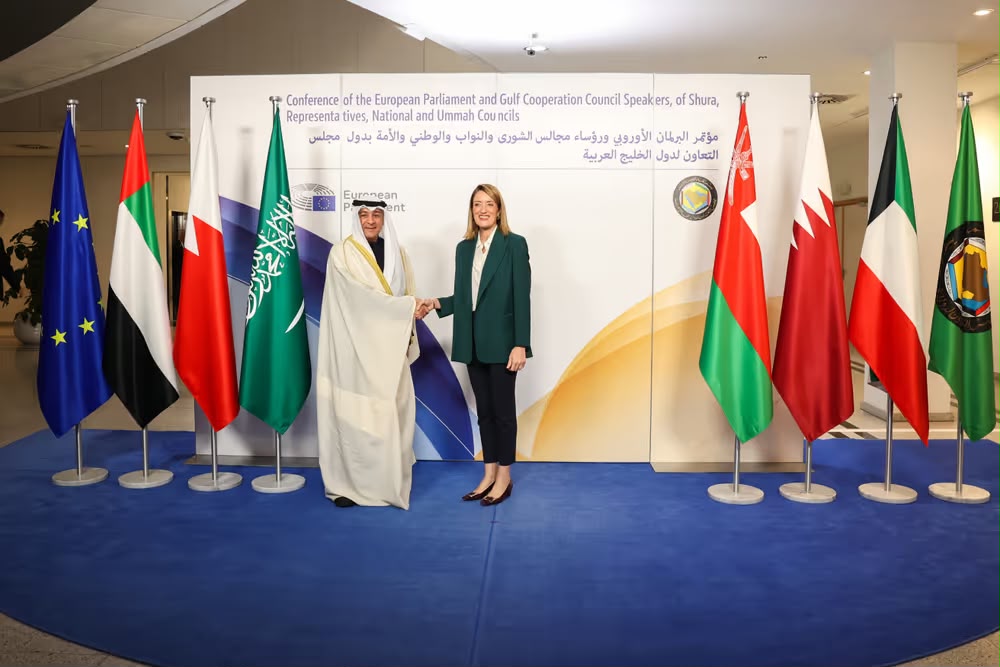
His Excellency’s remarks were delivered during his address at the 2nd Meeting of the Shura, Representatives, National, and Ummah Councils of the GCC Member States with the European Parliament, held today, Friday (October 16, 2026), at the European Parliament headquarters in the Belgian capital, Brussels. The meeting was co-chaired by Her Excellency Ms Roberta Metsola, President of the European Parliament, and His Excellency Mr Ahmed bin Salman Al Musallam, Speaker of the Council of Representatives of the Kingdom of Bahrain, in the presence of Their Excellencies the Speakers of the legislative councils across the GCC member states and members of the European Parliament.
At the outset of his address, His Excellency the Secretary General expressed his sincere thanks and appreciation to Her Excellency Ms Roberta Metsola, President of the European Parliament, for her gracious invitation and keenness to sustain the GCC-EU parliamentary dialogue as a regular track for cooperation and consultation since the convening of its inaugural meeting in the United Arab Emirates (UAE) capital, Abu Dhabi, in June 2025, graciously hosted by the Federal National Council (FNC) of the UAE.
Regarding regional security developments, His Excellency the Secretary General underscored that GCC member states were subjected to treacherous Iranian attacks targeting their sovereignty and security and threatening freedom of navigation in the Strait of Hormuz, which adversely impacted the global economy and energy supplies.
He pointed out that, despite these attacks, GCC states have maintained diplomacy and dialogue as an unwavering approach in addressing these developments, made extensive efforts to de-escalate tensions across the region, and called for the full implementation of United Nations (UN) Security Council (UNSC) Resolution 2817.
In this context, His Excellency commended the EU's position condemning these assaults, as well as its swift response through convening several joint GCC-EU meetings to exchange views on regional de-escalation, alongside providing necessary defensive technical support. He emphasised that these stances reflect aligned visions between both sides on the importance of multilateral action and respect for international law.
His Excellency also praised the European Parliament’s clear and unequivocal stance in condemning the Iranian attacks and expressing solidarity with the GCC member states. He highlighted the supportive positions towards the security and sovereignty of GCC states that he witnessed during his briefing before the European Parliament’s Committee on Foreign Affairs in April 2026, as well as during his meetings with several European officials, affirming that these stances are deeply appreciated and valued by the GCC member states.
In the context of GCC-EU relations, His Excellency the Secretary General pointed to the Joint Statement issued by the 1st Meeting of the Speakers of the Shura, Representatives, National, and Ummah Councils of the GCC Member States with the President of the European Parliament, which underlined the strength of the existing links and strategic partnership between the GCC states and the EU—founded on mutual respect, cooperation, and shared interests—thereby cementing security, stability, development, and prosperity for both sides.
His Excellency underscored that the determination to convene the 2nd GCC-EU Summit embodies the shared commitment to bolstering, advancing, and expanding the horizons of this partnership. "Parliaments play a pivotal role in translating understandings reached by governments into legislation and decisions that directly impact the lives and interests of citizens," His Excellency asserted. In this regard, he highlighted the institutional significance of the European Parliament within the EU’s decision-making architecture as a core pillar in decision-making and enacting legislation alongside the Council of the EU and the European Commission, which lends GCC-EU parliamentary cooperation particular importance in supporting the strategic partnership pathways between both sides.
On the economic front, His Excellency the Secretary General explained that the GCC’s experience in economic integration—ranging from the Customs Union and the Gulf Common Market to electrical grid interconnection and numerous other areas of cooperation—was founded on the very same conviction that underpinned the European project: namely, that the interlinkage of economic and developmental interests constitutes the strongest guarantee for stability and sustainability. "Economic ties between GCC member states and the EU rest on a solid foundation witnessing continuous growth, with bilateral trade in goods reaching approximately $189 billion in 2025, and the EU standing as the GCC’s second-largest trading partner," His Excellency indicated, adding: "This level of trade exchange, despite its significance, remains below the aspirations and economic potential of both sides." He reiterated the GCC’s keenness and desire to enter into free trade negotiations with the EU at the earliest opportunity to unlock broader horizons for trade, investment, and economic integration. Within this framework, His Excellency the Secretary General underlined that GCC legislative councils and the European Parliament can play a direct and impactful role across three key areas, the first of which is economic legislation and implementation. He explained that numerous partnership tracks—from trade negotiations to sectoral cooperation—are linked to legislative and regulatory frameworks, and that parliamentary support for these frameworks would save years of delay and accelerate the implementation of joint initiatives and projects.
In the energy sector, His Excellency asserted that GCC member states have proven their status as a reliable energy supplier under the most challenging circumstances, while simultaneously continuing to invest in renewable energy and clean hydrogen, thereby bolstering their role as a strategic partner to Europe in ensuring energy security today and supporting the energy transition in the future. His Excellency also pointed to the importance of connectivity projects and economic corridors, which offer GCC member states and the EU vast opportunities to elevate economic and trade connectivity and transform the region into an economic bridge linking Asia with Europe.
His Excellency expressed his aspiration that European sustainability instruments, which remain under review, will be commensurate with the nature of the existing economic partnership and will not impose additional burdens and costs on reliable partners or on global supply chains facing mounting pressures and challenges.
Regarding the second area, pertaining to people-to-people ties, His Excellency the Secretary General explained that GCC member states have taken significant steps to facilitate the entry of European citizens into their territories, while welcoming the measures taken by the European side to facilitate travel for citizens of GCC member states.
His Excellency also underscored the determination of GCC member states to build upon these steps toward exempting all citizens of GCC member states from the Schengen visa, thereby bolstering human, social, and economic connectivity between both sides and contributing to expanding opportunities for cooperation and exchange. Furthermore, His Excellency underlined the importance of boosting cooperation in the fields of education, scientific research, culture, and youth as essential pillars for building bridges of communication between societies and solidifying the GCC-EU partnership among future generations who will assume the responsibility of developing and sustaining it.
Regarding the third area, pertaining to regional security and stability, His Excellency the Secretary General affirmed that GCC member states anchor their positions on regional and international issues—including developments in Palestine, Lebanon, Syria, and Sudan—in unwavering principles based on respecting state sovereignty, non-interference in internal affairs, and adherence to the principles of good neighbourliness. His Excellency reiterated the steadfast position of GCC member states regarding the Palestinian cause, stressing that the establishment of an independent Palestinian state along the 1967 borders, with East Jerusalem as its capital, within the framework of the two-state solution, constitutes the foundation for achieving sustainable security and stability in the region.
Concerning the Russian-Ukrainian crisis, His Excellency emphasised that the position of GCC member states remains resolute in supporting peaceful solutions through dialogue and diplomacy, while rejecting the use of force as a means to settle disputes. He noted the ongoing humanitarian efforts undertaken by GCC states, which have yielded prisoner exchange operations and family reunifications for children with their relatives between the Russian and Ukrainian sides.
Regarding the Yemeni file, His Excellency the Secretary General reiterated the GCC member states' support for the legitimate Yemeni government and its efforts aimed at reinforcing the unity, sovereignty, security, and stability of the Republic of Yemen. "The security of the Arabian Gulf region is directly linked to the security of the Red Sea and the Bab el-Mandeb Strait, and that any threat to these vital maritime corridors extends its impact to European ports, markets, and international trade," His Excellency explained. In this context, His Excellency praised the EU's efforts through Operation Aspides and the role it undertakes in supporting maritime security in the region.
Concerning the Houthi attacks against the Kingdom of Saudi Arabia, His Excellency the Secretary General expressed his strong condemnation of the treacherous and repeated Houthi assaults the Kingdom has faced over the past weeks, which targeted airports, civilian facilities, and populated areas, resulting in civilian casualties and injuries. He noted that the extension of these attacks to Makkah Al Mukarramah and Al Madinah Al Munawwarah represents a flagrant provocation to the sentiments of Muslims worldwide, a crossing of all red lines, and a violation of humanitarian, religious, and legal values and principles. Furthermore, His Excellency pointed to the successive attacks directed at the capital, Riyadh, over the past few days, foremost among them the Houthi assault targeting the passenger terminal at King Khalid International Airport on October 10, which resulted in dozens of deaths and hundreds of injuries among citizens, residents, and Umrah performers of various nationalities.
His Excellency stated that these attacks were not limited to King Khalid International Airport, but extended to other airports across the Kingdom, leading to the suspension of operations at the capital's airport and disrupting flights for hundreds of thousands of travelers. "This reflects the gravity of these terrorist acts against the security and safety of international civil aviation. The recurring and deliberate targeting of civilian facilities reveals a criminal, terrorist modus operandi, and that targeting civil airports does not merely constitute an attack on the Kingdom of Saudi Arabia alone, but poses a direct threat to every traveler—regardless of their nationality—and to the international civil aviation system upon which the world relies," His excellency pointed out. He underlined that these assaults form a dangerous escalation and a flagrant violation of international law and international humanitarian law, emphasising that targeting civilians, civilian facilities, and holy sites constitutes an act of terrorism that can under no circumstances be justified.
His Excellency the Secretary General concluded his statement by stating that what unites GCC member states and the EU transcends the boundaries of geography, resting instead on shared interests, values, and aspirations. He noted that the security of each side serves as an extension of the other's security, necessitating continued coordination, cooperation, and joint action to address challenges and achieve a more secure, stable, and prosperous future.