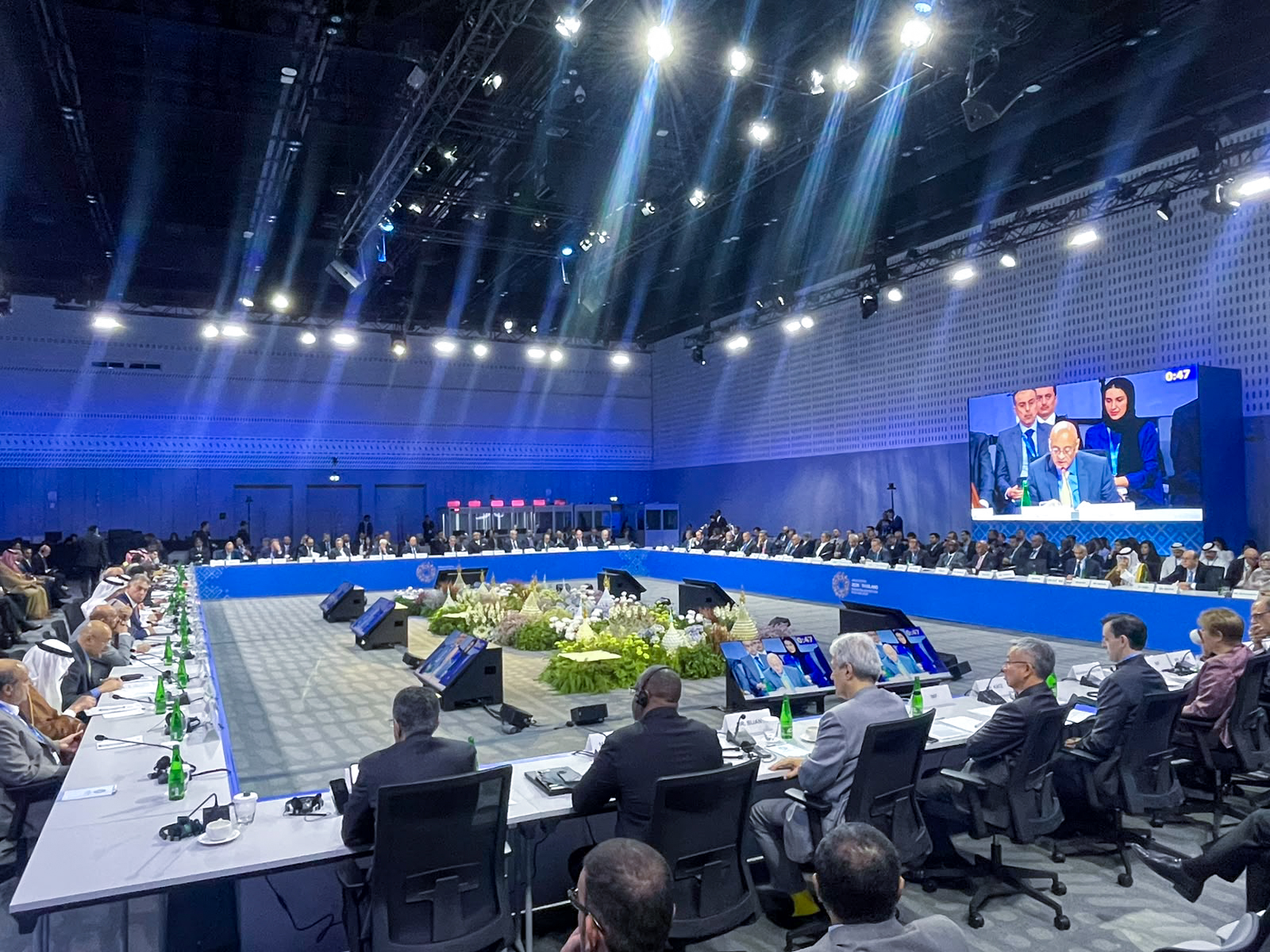
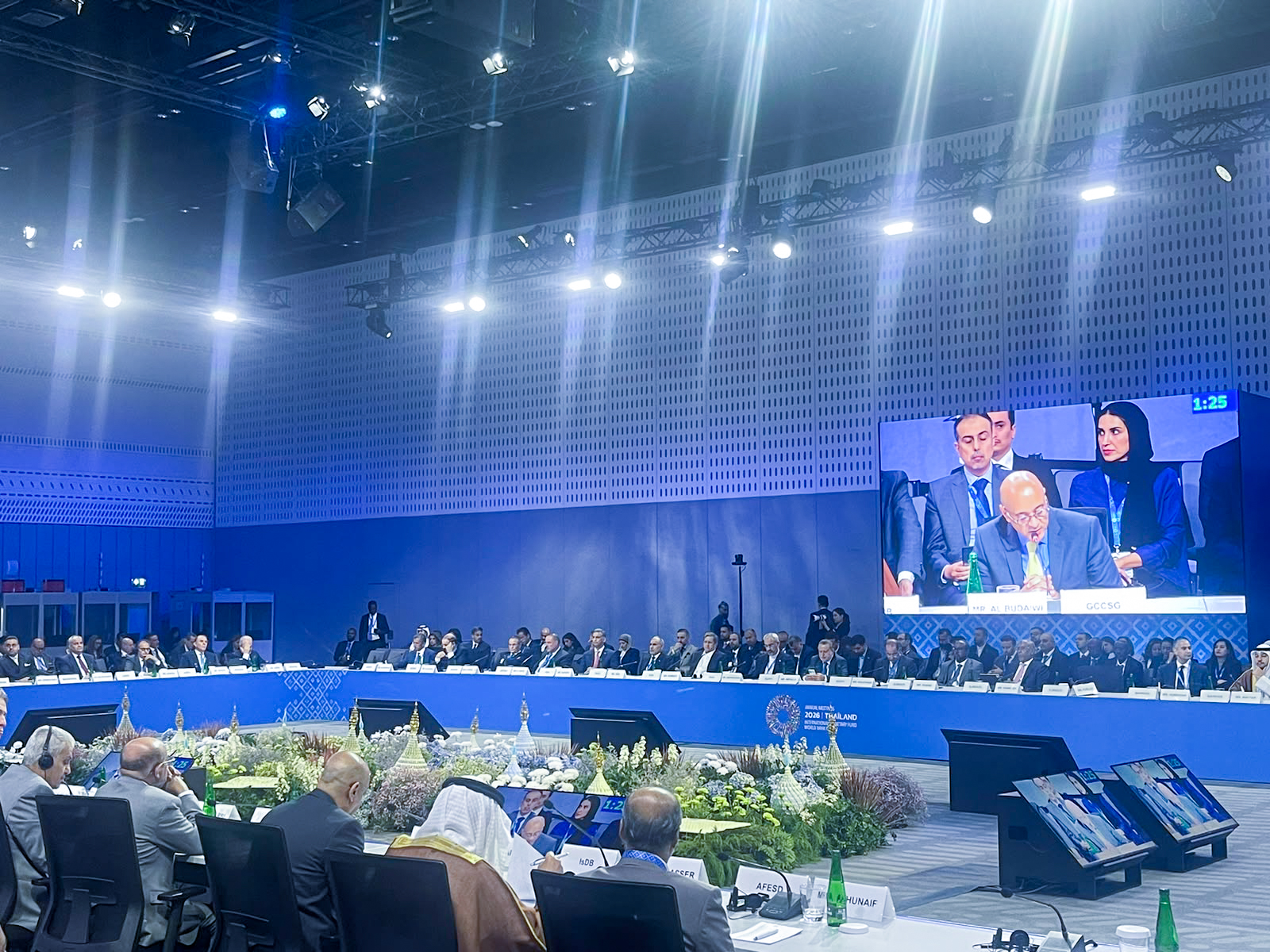
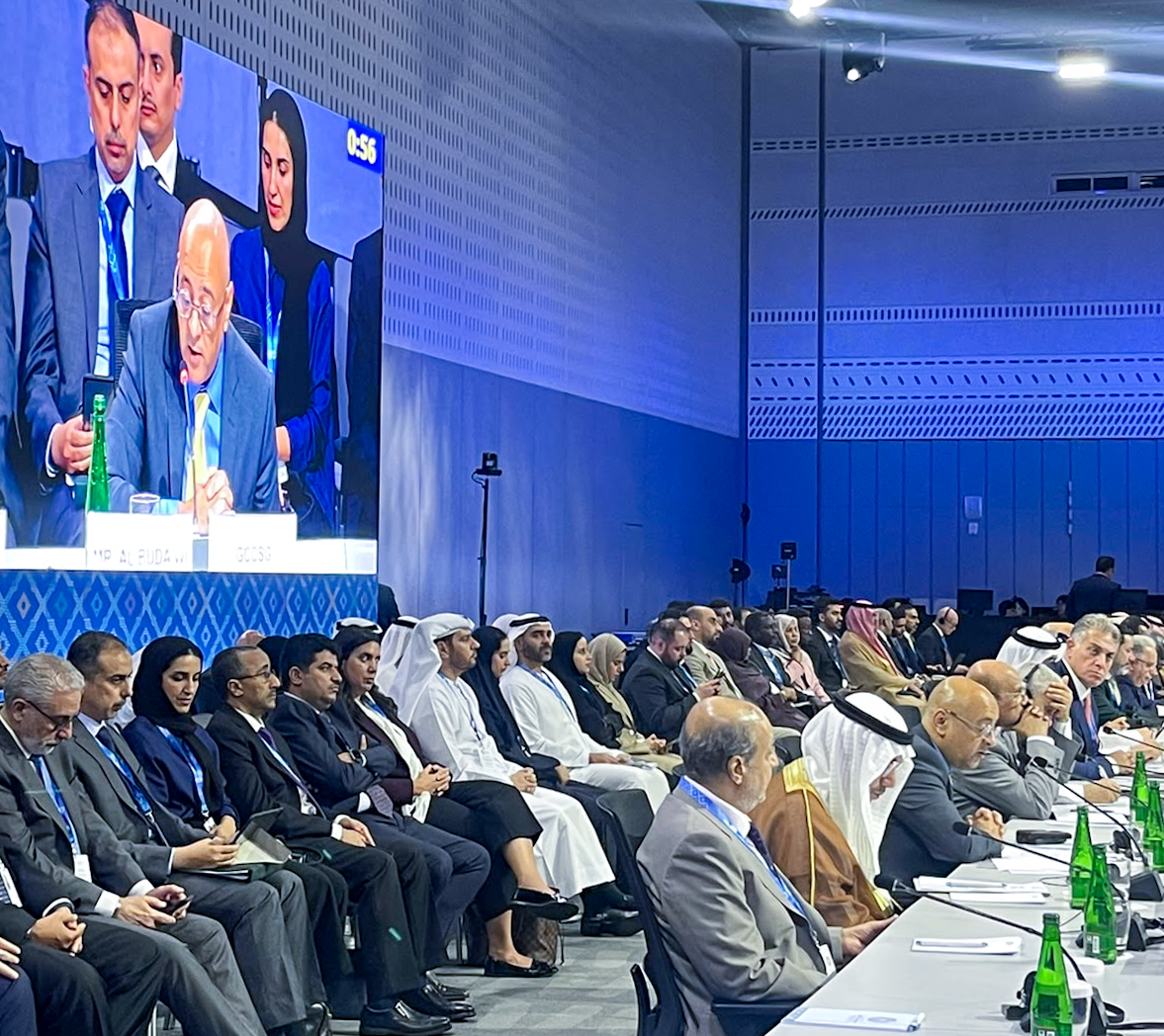
His Excellency Mr Jasem Mohamed Albudaiwi, Secretary General of the Gulf Cooperation Council (GCC), underscored that GCC states have demonstrated their capacity to withstand economic shocks and geopolitical challenges, bolstered by solid economic fundamentals, robust financial reserves, established banking systems, and prudent economic policies, alongside sustained progress across economic diversification pathways. He stressed that advancing Gulf economic integration and expanding international partnerships represent two fundamental pillars for anchoring economic stability and achieving sustainable growth.
His Excellency’s remarks were delivered during his participation in the Meeting of Ministers of Finance and Central Bank Governors of the Middle East, North Africa, Afghanistan, and Pakistan (MENAP) region with Ms Kristalina Georgieva, Managing Director of the International Monetary Fund (IMF), held today, Wednesday (October 14, 2026), on the sidelines of the 2026 Annual Meetings of the IMF and the World Bank Group (WBG).
At the outset of his address, His Excellency the Secretary General expressed his appreciation to the IMF and its Managing Director for their continuous efforts to support economic stability and foster cooperation with the countries of the region.
"Recent geopolitical developments have cast a shadow over the economies of numerous nations, both directly and indirectly, through disruptions impacting energy production, maritime shipping, trade, and supply chains.These developments have underscored the close interlinkage between the economic stability of GCC member states and global economic stability, and that any disruptions affecting vital energy corridors and trade routes are not confined to the region, but extend across international markets and economies," His Excellency explained.
His Excellency the Secretary General pointed out that GCC economies possess strong fundamentals enabling them to sustain recovery and achieve growth through 2027 and beyond, underpinned by sustained economic diversification efforts and qualitative investments. At the same time, he emphasised the importance of maintaining prudent fiscal policies, bolstering financial sector resilience, and preserving adequate fiscal buffers to mitigate potential risks and future economic volatility.
"The upcoming phase requires striking a balance between responding to immediate economic challenges and safeguarding long-term fiscal sustainability, alongside bolstering the capacity of Gulf economies to navigate any future disruptions with efficiency and flexibility, thereby ensuring sustained growth and preserving the economic and developmental gains achieved by GCC member states," His Excellency stressed.
His Excellency the Secretary General also affirmed that enhancing the resilience of Gulf economies should not be confined to addressing the immediate repercussions of economic shocks, but must extend to developing economic and fiscal policy frameworks, accelerating the pace of economic diversification, and deepening integration among GCC member states, thereby bolstering their competitiveness and anchoring their ability to navigate global economic shifts.
Regarding future economic opportunities, His Excellency explained that GCC member states hold promising prospects across several strategic sectors, foremost among them advanced industries, digital infrastructure, artificial intelligence (AI), and human capital development, alongside empowering the private sector and boosting its participation in global value chains as key drivers of future economic growth.
His Excellency added that deepening Gulf economic integration, expanding trade and investment opportunities, cementing logistical connectivity, and diversifying export markets and supply routes represent strategic priorities that contribute to elevating the efficiency of GCC economies and bolstering their resilience and competitiveness at both the regional and international levels.
Concluding his address, His Excellency the Secretary General affirmed that the experiences and challenges witnessed across the region over recent months have demonstrated that building more resilient and sustainable economies does not rely solely on the strength of national fundamentals, but requires deeper regional integration, diversified international economic partnerships, and reliable trade and logistics networks connecting GCC economies with the world. His Excellency reiterated the commitment of GCC member states to continue working towards achieving these priorities, enhancing cooperation with regional and international partners, and transforming ongoing economic challenges into opportunities that foster a more diversified, prosperous, and sustainable Gulf economic future.