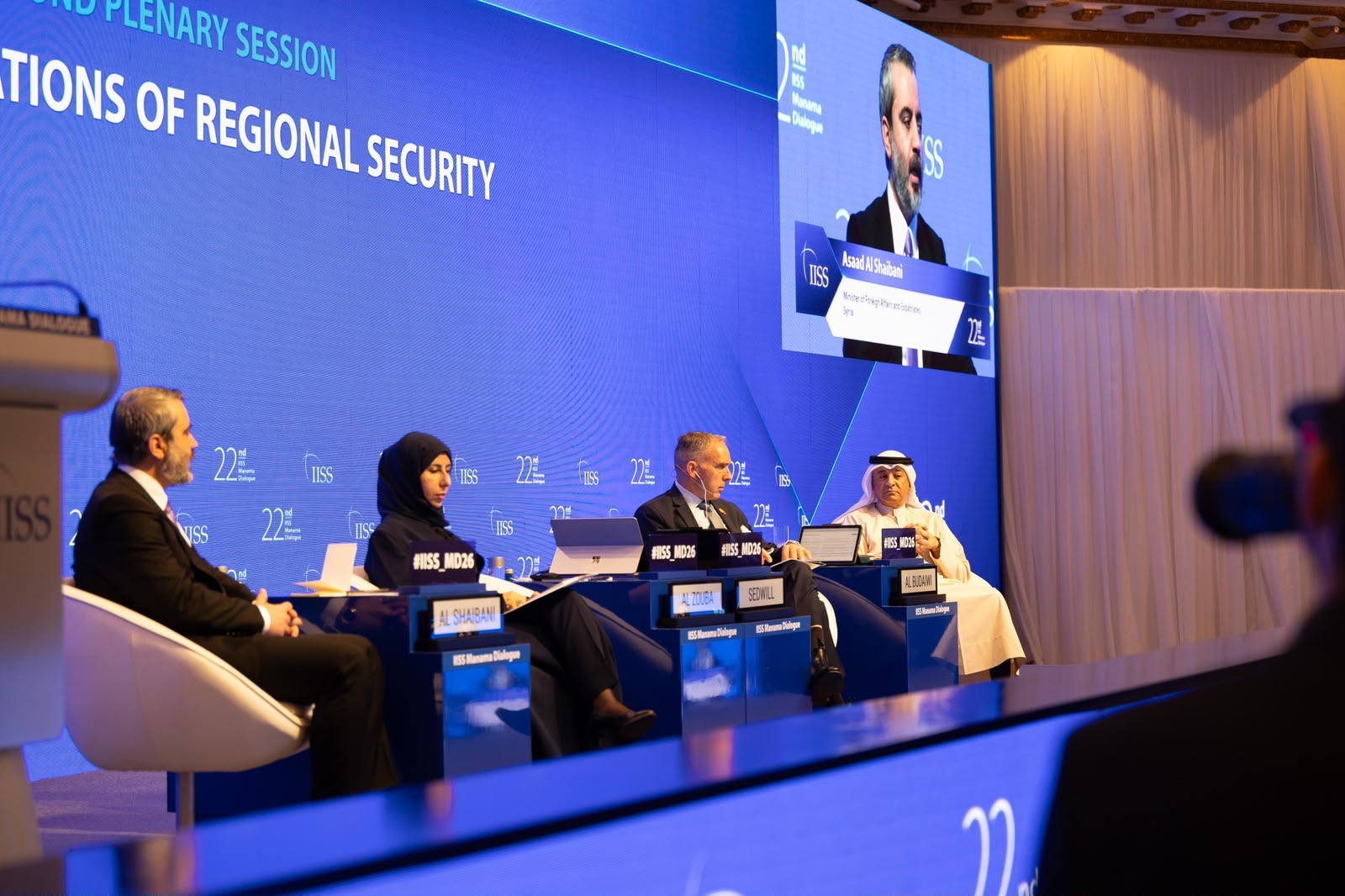
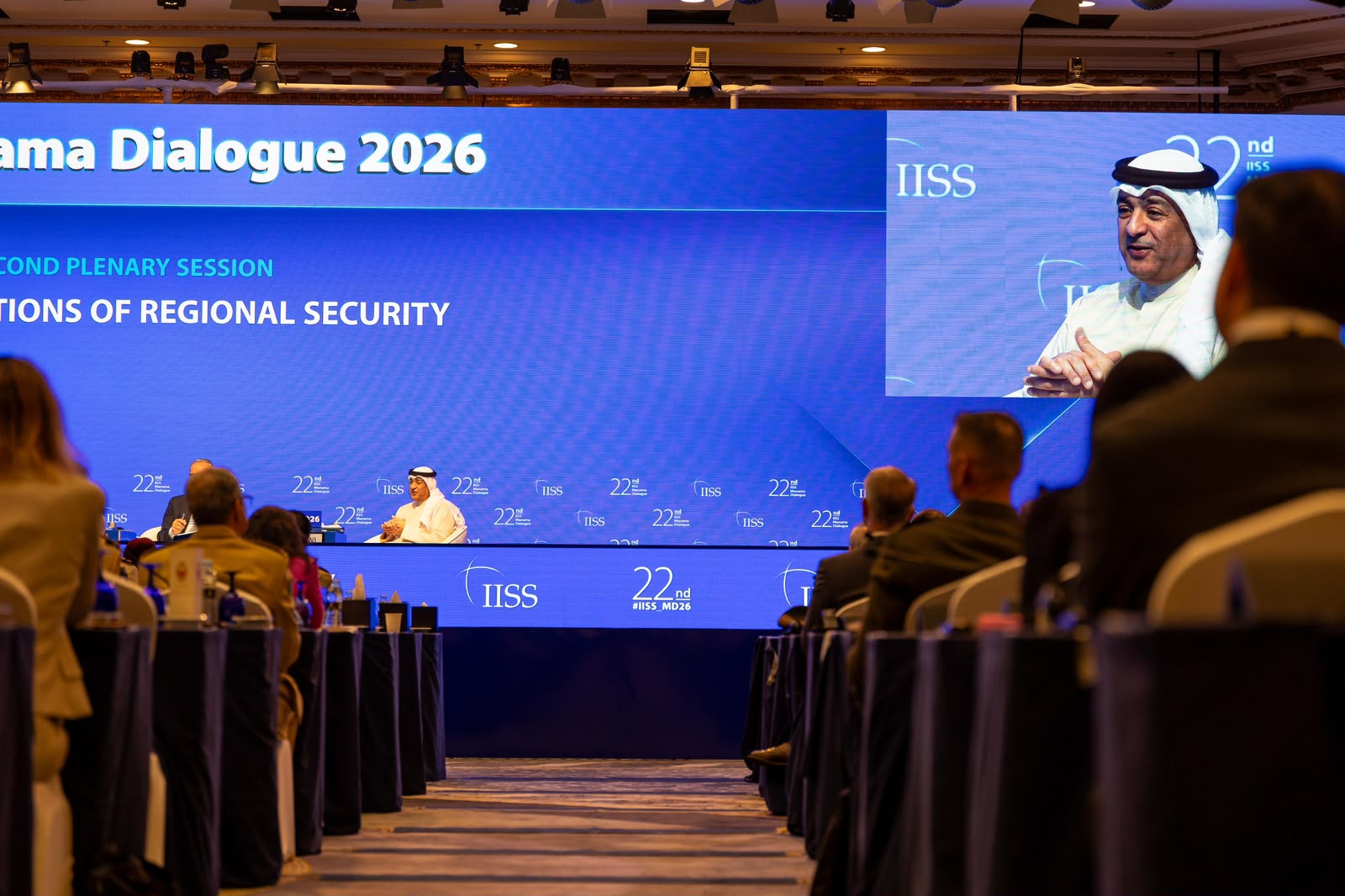
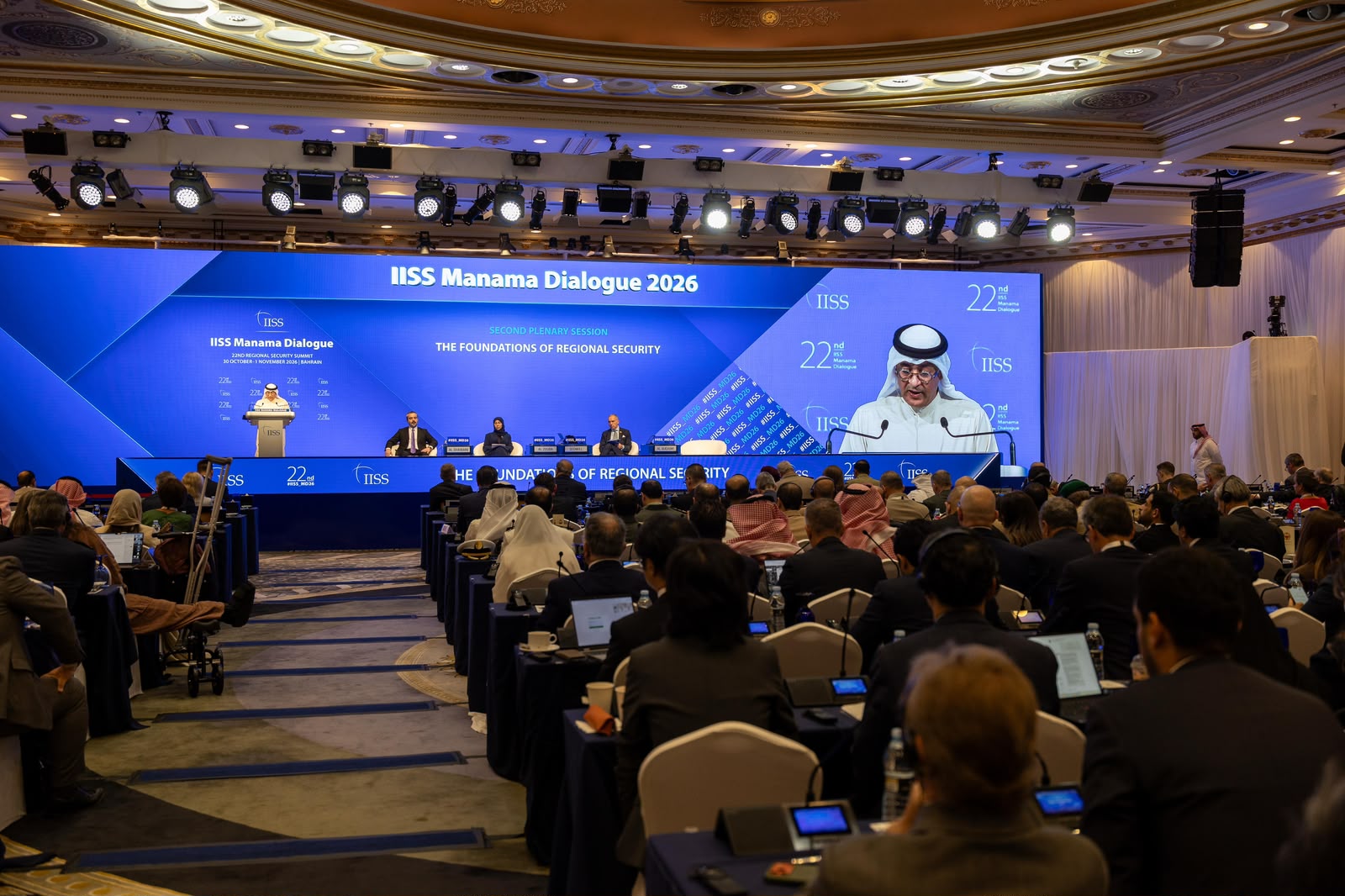
His Excellency Mr Jasem Mohamed Albudaiwi, Secretary General of the Gulf Cooperation Council (GCC), underlined that establishing a stable and sustainable regional security architecture necessitates strict adherence to the principles of international law and respect for state sovereignty, bolstering collective defence systems, prioritising diplomatic tracks, and safeguarding the security of waterways and energy supplies, alongside cementing development and international partnerships. He underscored that the security of the GCC states is indivisible and that the stability of the Arabian Gulf region constitutes a fundamental pillar of international peace and security.
His Excellency's remarks came during his participation in the third plenary session, titled "Pillars of Regional Security," held on the sidelines of the 22nd Regional Security Summit "IISS Manama Dialogue 2026," today, Saturday, 31 October 2026, in the Bahraini capital, Manama.
At the outset of his speech, His Excellency the Secretary General extended his deepest expressions of thanks and appreciation to the Kingdom of Bahrain—leadership, government, and people—for hosting this significant international dialogue for the 22nd consecutive year. He commended its continuous efforts in providing a high-level international platform to exchange visions and discuss security and strategic challenges. He also expressed his thanks to the International Institute for Strategic Studies (IISS) for the gracious invitation and excellent organisation, underscoring that the significance of this dialogue is doubled in light of the exceptional developments and unprecedented challenges the region is witnessing, which demand responsible international stances and shared visions that bolster prospects for security and stability.
"The developments experienced by the region since 28 February have put the foundations of regional security to a highly critical test, following the Iranian attacks that targeted the GCC states and their civilian and vital infrastructure, resulting in casualties. This occurred despite the GCC states not being a party to the war and not seeking it; rather, they exerted intensive diplomatic efforts for mediation and de-escalation, exercising the utmost degree of restraint," His Excellency explained.
He pointed out that the repercussions of these attacks were not limited to the countries of the region, but extended to the global economy as a result of the disruption of navigation in the Strait of Hormuz, through which approximately one-quarter of the world's seaborne oil trade passed prior to the crisis. This, he noted, impacted energy prices, shipping and insurance costs, and international supply chains.
Furthermore, His Excellency voiced his strong condemnation of the repeated terrorist attacks launched by the Houthi militias against the Kingdom of Saudi Arabia since last July, which extended to the holy cities of Makkah and Madinah. He underscored that these assaults represent a grave violation of the sanctity of Islamic holy sites, a provocation to the sentiments of Muslims worldwide, and a dangerous escalation that cannot be accepted or its repercussions tolerated.
His Excellency the Secretary General indicated that the experiences and challenges faced by the GCC states have underscored the necessity of relying on five main pillars to build a solid regional security architecture. "Foremost among these is respect for international law and state sovereignty, through adherence to the principles of good neighbourliness, non-interference in internal affairs, respect for territorial integrity, refraining from the use or threat of force, and the peaceful settlement of disputes," His Excellency explained.
In this context, His Excellency referred to United Nations Security Council Resolution 2817, issued on 11 March 2026, which was presented by the Kingdom of Bahrain on behalf of the GCC states and the Hashemite Kingdom of Jordan, and co-sponsored by 136 countries—representing the broadest support of its kind for a resolution in the history of the Security Council. He affirmed that the GCC states look forward to translating this broad international support into actual commitment to implementing the resolution and its provisions, thereby enhancing the credibility of international legitimacy and cementing respect for its rules.
Moreover, His Excellency stressed that collective defence and Gulf military integration represent the second pillar of regional security. He praised the high competence and readiness demonstrated by the armed forces of the GCC states in countering the attacks, which garnered the commendation of Their Majesties and Highnesses the Leaders of the GCC states during their 19th Consultative Meeting held in Jeddah this past April. He highlighted their directives to intensify Gulf military integration and expedite the completion of the early warning system against ballistic missiles, thereby bolstering joint defence capabilities and cementing the unity of Gulf security and destiny.
Regarding the third pillar, His Excellency the Secretary General said: "Diplomacy represents a strategic asset for the GCC states, anchored in their steadfast approach of advocating for dialogue, negotiation, and the peaceful settlement of disputes. The GCC states enjoy an international standing that enables them to build bridges of communication with various parties, serving as a strategic partner to the United States of America and Europe, and a reliable party in its relations with China, India, and Asian countries, in addition to maintaining existing communication channels with neighbouring countries, including Iran. This standing grants the GCC states a vital capacity to contribute to bridging viewpoints and de-escalating tensions; however, the success of diplomatic efforts remains contingent upon mutual will and a responsible response from all parties."
Concerning the fourth pillar, His Excellency underlined that the security of maritime navigation and energy supplies is a shared international responsibility, and that freedom of navigation and the right of transit passage are guaranteed under international law and the 1982 United Nations Convention on the Law of the Sea. He emphasised that disrupting international navigation and closing the Straits of Hormuz or Bab al-Mandab constitute a flagrant violation of these principles and a direct threat to the economic and commercial interests of the entire world.
His Excellency called upon the international community to take a firm stance to put an end to these attacks, ensure accountability for those responsible, and work towards restoring navigation in these vital corridors to its normal state prior to 28 February. He pointed out that the GCC states, guided by the directives of Their Majesties and Highnesses the Leaders of the GCC states, are working to maintain the resilience of the energy supply system and mitigate its exposure to risks. This is being achieved by advancing oil and gas pipeline projects, exploring the establishment of strategic reserve zones, and accelerating water and electricity interconnection projects as well as the Gulf Railway project, embodying the GCC's commitment to the sustainability of energy flows and supporting the stability of the global economy, His Excellency highlighted.
As for the fifth pillar, His Excellency explained that it involves building stability through development and international partnerships. He stressed that the GCC states have successfully built a robust economic and financial base, amounting to approximately USD 2.4 trillion, which has bolstered their capacity to withstand crises and absorb economic shocks, contributing to solidifying their position as an active partner in supporting regional and international stability.
He added that the GCC states base their regional efforts on a firm conviction that sustainable security cannot be achieved through military solutions alone, but requires addressing the root causes of crises and bolstering opportunities for development and stability. He highlighted the GCC's continued support for the legitimate government in the Republic of Yemen, reaching a comprehensive political solution to the Yemeni crisis in accordance with the agreed-upon references, as well as supporting the security, stability, and sovereignty of the Republic of Iraq, the Syrian Arab Republic, and the Lebanese Republic.
His Excellency reiterated the affirmation that achieving lasting peace in the region remains linked to securing a just and comprehensive solution to the Palestinian cause based on the two-state solution, ensuring the legitimate rights of the Palestinian people. He noted that the concept of regional security now also encompasses water and food security, as well as confronting climate challenges, as they are essential elements for sustaining stability and development.
His Excellency the Secretary General concluded his speech by underscoring that the events witnessed by the region this year have proven that regional security cannot rely solely on the balance of power, but rather on international rules respected by all parties, and a security architecture in which the countries of the region participate in formulating its foundations and defining its priorities. He underlined that the GCC states, through the cohesion, unity of position, and responsibility they have demonstrated in facing challenges, stand ready to play a pivotal role in building this architecture. He recalled the GCC Vision for Regional Security, launched in 2024, noting that it remains an open invitation to all parties for joint action towards a secure and prosperous future, stressing that this invitation stands for anyone who translates their commitment to peace and security into responsible actions and stances.